16 Days of Activism 2025: UNiTE to End Digital Violence Against All Women and Girls
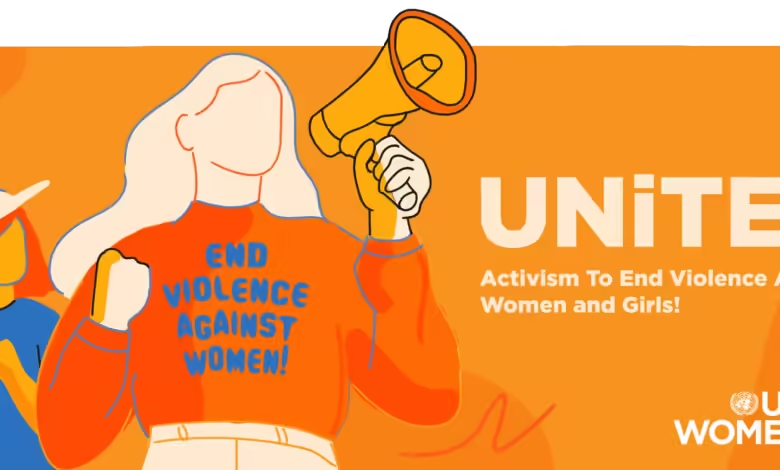
As the world prepares once again for the 16 Days of Activism Against Gender-Based Violence from 25 November to 10 December 2025, we raise our collective voices with renewed urgency. Violence against women and girls remains one of humanity’s most pervasive and persistent injustices. This year, the UN Secretary-General’s UNiTE 2025 Campaign calls on all of us to confront one of the fastest-growing and most dangerous forms of abuse: digital violence against women and girls.
Under the theme: “UNiTE to End Digital Violence Against All Women and Girls”
the 2025 campaign is a global rallying call: Online spaces must be safe. Technology must empower, not endanger. And digital violence must end now.
Why This Year Matters: 30 Years After Beijing
The 2025 campaign coincides with the 30th anniversary of the Beijing Declaration and Platform for Action, one of the most transformative global commitments on women’s rights. Yet, three decades later, gender-based violence persists, now amplified by sophisticated technologies.
Nearly 1 in 3 women worldwide has experienced physical or sexual violence. Millions more endure online harassment, image-based abuse, deepfake pornography, stalking, and threats; forms of violence that often spill offline into coercion, assault, and even femicide.
Digital spaces, once heralded as platforms for empowerment, have in many cases become minefields of intimidation and control, particularly for:
- Young women and girls
- Activists
- Journalists
- Women in politics
- Human rights defenders
- Women facing intersectional discrimination
Ending digital violence is now central to achieving gender equality.
What is Digital Abuse?
Digital violence includes any form of abuse, harassment, or exploitation facilitated by technology. Common forms include:
- Image-based abuse (non-consensual sharing of intimate images)
- Cyberbullying, trolling, and online threats
- Sexual harassment in digital spaces
- Deepfakes and AI-generated sexual content
- Doxxing (leaking private information)
- Online stalking and real-time tracking
- Online grooming and sexual exploitation
- Impersonation and catfishing
These acts cause psychological trauma, reputational harm, economic loss, and often escalate into offline violence.
Why Digital Abuse Is Hard to Stop
The issue persists and spreads because:
- Many countries lack legal definitions for digital violence
- Tech companies often fall short on content moderation
- AI creates new, harder-to-detect abuses
- Anonymity and cross-border attacks hinder accountability
- Societal norms in online spaces normalize misogyny
- Survivors have limited support systems
Global Momentum: Progress Since 2024
Recent milestones include:
- UN Global Digital Compact (2024): First UN-wide standard for digital safety and AI governance
- UN Cybercrime Convention (2024): First international treaty with implications for digital violence
- UNGA Resolution on Violence Against Women in Digital Environments (2024) urging stronger regulation and accountability
- Global standards under development for measuring technology-facilitated gender-based violence
- New regional frameworks, including the AU Convention on Ending VAWG and the EU Digital Services Act
UNiTE 2025: What This Year’s Campaign Calls For
The UN calls on all sectors to act:
Governments
- Criminalize digital violence
- Strengthen platform accountability
- Protect personal data
- Invest in digital safety infrastructure
Tech Companies
- Enforce robust community standards
- Remove harmful content promptly
- Publish transparent safety reports
- Prioritize the safety of women and girls
Donors & Global Partners
-
Invest in feminist and digital rights organizations
Individuals
- Speak out
- Support survivors
- Challenge misogyny and harmful online norms
Understanding Digital Violence Through a Gender Lens
The 16 Days of Activism emphasizes that digital violence is not merely an online problem. It is a human rights issue that:
- Silences women’s voices
- Limits participation in public life
- Reinforces gender inequality
- Normalizes misogyny
- Endangers women offline
How You Can Take Action This Year
From 25 November to 10 December 2025, take part in bold, visible, and meaningful actions. Partner with:
- Civil society organizations
- Schools and universities
- Youth groups
- Local governments
- Private sector partners
- Faith and community leaders
Ways to Participate:
- Host digital safety workshops
- Share verified information and resources
- Support male-allyship campaigns
- Advocate for stronger cyber laws
- Volunteer or donate to survivor-support services
- Use campaign hashtags: #16Days #EndDigitalViolence #OrangeTheWorldI
Why the 16 Days Still Matter
Since its launch in 1991, the 16 Days of Activism has become a global force, mobilizing thousands of organizations across 190 countries. It connects the fight against gender-based violence to the broader struggle for human rights, reminding the world that violence against women is:
- Not inevitable
- Not private
- Not acceptable
Conclusion
As we approach the 16 Days of Activism 2025, the message is clear: To truly empower women and girls, we must ensure that digital spaces; our classrooms, workplaces, markets, and global communities are safe and respectful.
Ending digital violence requires collaboration, investment, accountability, and a shared belief:
Every woman and girl deserves a world; online and offline where she can live, learn, speak, and lead without fear. This year, let us transform awareness into action, and action into lasting change.