Ochanya Elizabeth Ogbanje: The Fruit of a Poisonous Tree
I have always believed there is a seed of resistance planted by God in every child, a sacred instinct to say no to oppression, injustice, and silence. I saw that seed in myself as a young boy: the courage to question unfairness, to challenge teachers, to speak truth even when my voice trembled, even amid suppression at the hands of my primary and secondary handlers.
At 18, that seed found expression in my first published article, printed in The Punch on June 10, 1988. I had written to protest the harassment of my family by a soldier, an act of raw defiance that, in retrospect, marked my first encounter with the spirit of advocacy. Years later, at Lagos State University, that same spirit led me into the Students’ Union, where I had the lifetime privilege and honor of serving as Director of Welfare under Dele Farotimi, then President of the Students’ Union Government. His courage and conscience, which I continue to admire to this day, birthed between us a lifelong relationship and comradeship rooted in shared conviction and truth.
Since 1997, two years before I was called to the Nigerian Bar, that spirit has driven my life’s work in child safeguarding and protection. I have campaigned for over two decades for children’s right to safety, dignity, and justice.
Yet somewhere along this journey, I realized that advocacy for child rights, safeguarding, and protection cannot stand apart from the state of the nation. You cannot give what you do not have. A nation that lacks justice cannot dispense it, not to children, not to anyone. It was through many conversations with my brother and friend, Dele Farotimi, that I came to see and accept the inevitable nexus between the condition of Nigeria and the fate of its children.
If a system is unjust at its roots, then even its noblest fruits will be tainted.
That is why, today, my reflections on Ochanya
Elizabeth Ogbanje are not only about a child’s tragedy but about a nation’s condition.
The Case That Broke a Nation’s Heart
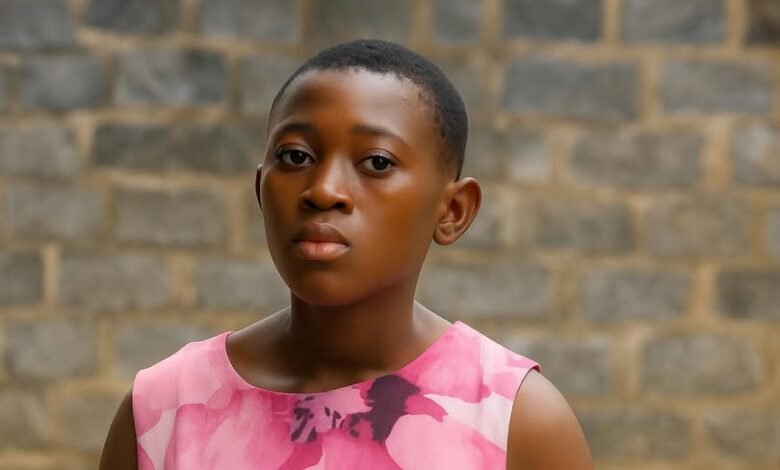
Ochanya, a 13-year-old schoolgirl from Benue State, died in October 2018 from complications of a vesicovaginal fistula (VVF), allegedly caused by prolonged sexual abuse while she lived under the guardianship of Andrew and Felicia Ogbuja.
Andrew, a lecturer at Benue State Polytechnic, and his son, Victor, were accused of serial sexual assault. In 2022, Andrew Ogbuja was acquitted by a High Court in Makurdi of rape and culpable homicide. His wife, Felicia Ochiga-Ogbuja, was, however, convicted of negligence for failing to protect Ochanya, a legal acknowledgment that abuse did occur under her watch. She received a five-month sentence without an option of fine.
Felicia’s conviction raises troubling questions:
If negligence was established in the same household, on what moral and legal basis did the principal accused walk free?
Why did the Benue State Ministry of Justice not appeal the acquittal?
Why has there been no consistent police update on Victor Ogbuja, reportedly still at large?
The issue is not to pre-judge the courts but to interrogate the systemic lethargy that defines Nigeria’s criminal-justice response to crimes against children. Justice, in principle, demands pursuit to its logical end. When it halts halfway, impunity becomes institutionalized.
The Poisonous Tree
Nigeria and its criminal justice system, as Dele Farotimi aptly puts it, do not have what it takes to deliver justice. To continue demanding justice from such a system is to give it the illusion that we believe it is capable of producing what it fundamentally lacks. No individual, family, institution, or nation can give what it does not have. What often looks like justice in isolated cases is, at best, a trick of circumstance, an exception that disguises the rule. Justice, to be real, must be in the character of the State, not in its moments of convenience.
Ochanya’s case is not an isolated tragedy; it is the fruit of a poisonous tree. That tree is Nigeria and its criminal justice system, a system whose roots are watered by delay, negligence, weak institutions, and selective outrage. It is a system that reacts to public pressure but rarely reforms itself. Even when collective outrage forces its hand to prosecute, convict, or sentence, what follows is often symbolic justice: a performance, not a principle.
We applaud the few cases that make headlines while countless invisible children suffer in silence, their pain buried in the shadows of bureaucracy and neglect. This is the painful irony: even when justice appears done, the nation itself remains unjust. Because justice that depends on pressure is not justice; it is concession.
Justice for Ochanya, Justice for Nigeria
Abuse happens everywhere. What distinguishes nations is not the absence of evil but their disposition to justice. The courts sat, but justice stalled midstream. The nation mourned, but the system did not change.
Until we confront the structural failures that make justice optional, we will continue to harvest bitter fruits from this poisonous tree.
We must demand #JusticeForOchanya. But if our outrage stops there, we miss the point.
The deeper demand is justice that seeks to rescue Nigeria from its criminal justice system, systemic reform that makes justice predictable, not performative.
Only a just nation can raise safe children