
Helping Children Understand Loss: Lessons from Erika Kirk’s Journey Through Grief and Love
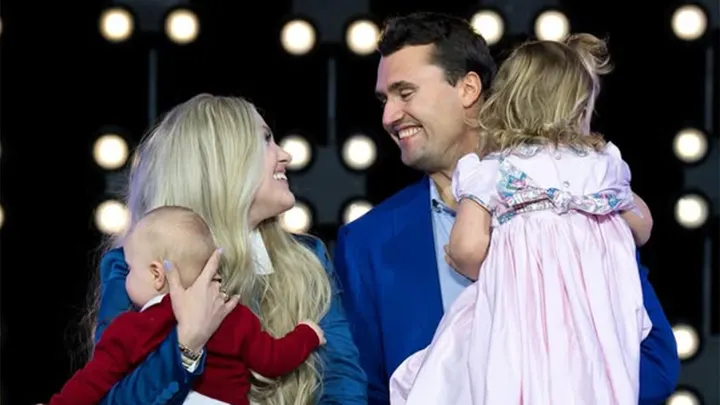
When Erika Kirk’s little daughter asks, “Where’s Daddy?” she answers with a blend of faith, gentleness, and honesty:
“If ever you want to talk to Daddy, you just look up to the sky and start talking.”
It’s a tender response from a mother trying to help her child understand something that even adults struggle to make sense of the loss of a loved one.
Erika Kirk, widow of the late activist Charlie Kirk, has spoken publicly about the painful reality of navigating grief with two children after her husband’s sudden death at 31. In moments of heartbreaking openness, she has shared how she leans on faith and emotional transparency to guide her children through the confusing terrain of loss.
When her daughter asked if her father was in another house, Erika softly replied, “Yes, baby, he’s building a house for us. Some people would call it a mansion.” It’s a powerful example of what child psychologists call “age-appropriate truth”, offering a clear and comforting explanation that helps children grasp death without unnecessary fear.
For many parents, discussing death feels impossible. The instinct is to shield children from pain. Yet silence often deepens their confusion. A child’s mind tries to make sense of what’s missing, and without guidance, they can fill the silence with worry or guilt.
The death of a loved one can overwhelm even the most resilient adults and for a child, it can feel like the world has shifted in ways they cannot name. Unlike adults, children often express grief in bursts crying one moment, playing the next. These shifts are not signs of indifference but of coping. Play gives children a way to express what words cannot.
Experts encourage parents to avoid euphemisms when explaining death. Telling a child that someone has “gone to sleep” or that “we lost them” can be confusing or frightening. Instead, gentle honesty that a person’s body stopped working and they cannot come back, gives clarity and security. Children need to understand not only that their loved one has died, but also that they are safe, loved, and not at fault.
Grief, though painful, is also an act of love. Mourning helps both children and adults accept the reality of loss, honour the memory of the person, and find ways to carry their presence forward. Families can encourage children to participate in remembrance: drawing pictures, lighting a candle, writing a note, or sharing stories about happy times. These rituals affirm that their loved one’s importance remains part of the family’s story.
Faith and cultural traditions can also provide strength and meaning. For many families, spiritual language like Erika’s image of a father “building a house in heaven” offers comfort and a sense of connection. Others may turn to rituals, community gatherings, or shared storytelling to honour their loved one. What matters most is allowing the child to process loss in a way that feels natural and supportive.
Maintaining familiar routines is equally important. Regular meal times, bedtime rituals, and school routines help restore stability and reassure a grieving child that life continues and love endures. Physical affection like hugs, cuddles, and gentle words reminds them they are safe and deeply loved, even as everything around them feels different.
And while caring for grieving children, parents must also remember their own healing. Supporting a child through loss while mourning personally can be emotionally draining. Parents need rest, nourishment, and emotional outlets of their own. Seeking comfort through prayer, therapy, support groups, or trusted friends can strengthen one’s capacity to be present for the child. As is often said: “you cannot pour from an empty cup”.
Conclusion
Erika Kirk’s openness offers a quiet but powerful message; that honesty and love can guide families through even the deepest sorrow. When she tells her daughter to look up at the sky and talk to her father, she teaches something timeless: that death may take away presence, but never connection.
Children learn about loss not only through words, but through how the adults around them love, grieve, and heal. When parents face pain with gentleness, they show that love can survive even in absence. that remembering is not about holding on to sadness, but keeping someone’s light alive. In helping children understand death, we are not only explaining an ending, we are teaching them about love’s endurance, empathy, and hope.
Source of image: Charlie Kirk, his wife Erika and their two children at Christmas in December 2024. (Charlie Kirk via Facebook)