International Anti-Corruption Day 2025: Uniting with Youth Against Corruption
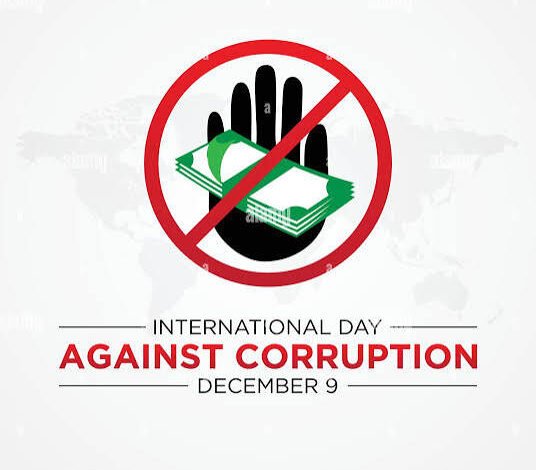
Corruption remains one of the most destructive forces undermining stable societies. It erodes public trust, weakens institutions, fuels inequality and deepens the daily struggles faced by communities around the world. International Anti-Corruption Day, marked every year on 9 December, offers a moment for countries and individuals to pause, reflect and renew their shared commitment to honesty in both public and private life.
The 2025 theme, Uniting with Youth Against Corruption: Shaping Tomorrow’s Integrity, shines a spotlight on young people, their influence, their lived experiences and the essential leadership role they must carry into the future.
Why This Year’s Focus on Youth Matters
Today’s world continues to grapple with challenges directly or indirectly linked to corruption. We see it in public services that fail to deliver basics, in stalled infrastructure projects that drain resources, and in systems that reward connections over competence. With 1.9 billion young people globally, nearly a quarter of the world’s population has an immediate stake in ensuring that corruption is confronted with courage and consistency.
This year’s campaign recognises young people not just as beneficiaries of a better future but as active participants in building it. They are more informed, more vocal and more connected than any generation before them. They are willing to ask difficult questions, challenge harmful norms and propose innovative ways to strengthen accountability.
The campaign encourages youth to speak openly about their experiences, organise conversations in their schools and communities, and push forward ideas that can reshape institutions. By providing space for their concerns and aspirations, the movement ensures that their voices influence decisions at local, national and global levels.
Understanding the Impact of Corruption
Corruption is not a single-layer problem. It is social, political and economic, a web that affects nations differently but harms them all.
- Politically, corruption manipulates electoral processes, weakens democratic institutions and feeds a culture of impunity.
- Legally, it undermines the rule of law, making justice feel selective and inaccessible.
- Economically, it discourages investment, stifles growth and pushes honest businesses, especially young entrepreneurs into silence or collapse.
For many young people trying to start careers, lead projects or launch businesses, the cost of navigating corrupt systems is so heavy that it limits opportunity long before they begin.
Global Efforts and the UN Convention
In 2003, the international community responded to these growing concerns through the United Nations Convention against Corruption (UNCAC), now ratified by 190 parties. It remains the world’s most comprehensive instrument for preventing, detecting and prosecuting corrupt practices.
When the Convention came into force in 2005, the UN General Assembly designated 9 December as International Anti-Corruption Day. The goal was simple but urgent, build awareness, strengthen cooperation and encourage nations to take honest action.
The Role of Families: Integrity Starts at Home
This year’s theme carries an important reminder for families. Integrity does not begin in government buildings or classrooms. It begins in living rooms, at dining tables, and in the everyday interactions between parents and children.
Children learn the meaning of fairness long before they encounter civic education. When adults model honesty, respect for rules and responsibility for their actions, they lay the foundation for future citizens who understand that integrity is a lifestyle, not an occasional choice.
- A child who grows up seeing shortcuts and favours as “normal” may one day accept corruption as part of life.
- A child who is encouraged to speak up when something feels wrong is more likely to defend integrity as an adult.
Families reinforce these values through open conversations about right and wrong, by explaining the consequences of dishonesty and by encouraging children to choose fairness even when no one is watching. Schools, faith communities and youth organisations strengthen these habits by promoting accountability and celebrating ethical behaviour.
Preparing the Next Generation
As children mature into teenagers and young adults, they carry these early lessons into the spaces where leadership is formed. Whether they become teachers, engineers, public officers, entrepreneurs or community leaders, the values nurtured at home continue to guide their choices.
Preparing them today increases the likelihood of building institutions tomorrow that resist corruption instead of enabling it.
In Conclusion
International Anti-Corruption Day 2025 reminds us that the pursuit of justice, stability and fairness is a collective task. Institutions must be strengthened, laws must be enforced and leaders must be accountable. Yet lasting change depends on the values carried by the young.
When societies intentionally guide children and youth toward integrity in their homes, their schools and their communities, they invest in a future where transparency becomes a norm, not an exception.
This year invites us to renew our promise: to raise children who value honesty, to support young people who dare to speak truth, and to build a world where integrity shapes the destiny of every generation.