When Charity Becomes Cruelty: A Review of the Documentary “Global Fundraising Scam Exploiting Children With Cancer” (BBC Eye Investigations)
Movie Review of the Week
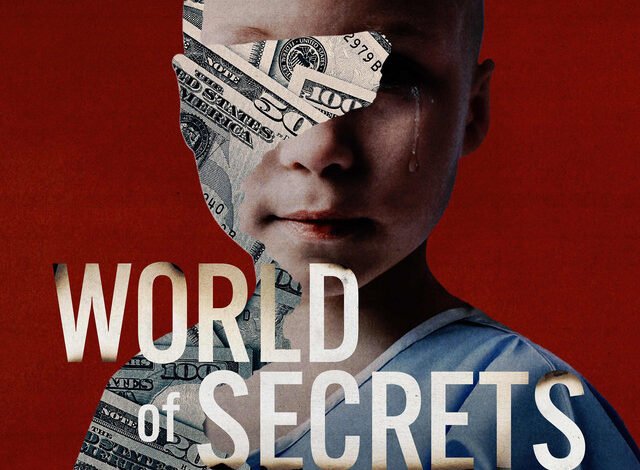
The documentary investigates a global network of organizations that claim to raise funds for children with cancer, particularly in war zones and impoverished regions. Through emotionally charged videos, they appeal to donors’ empathy and urgency. But as the BBC reveals, millions of dollars raised in the names of sick children never reached them. In several cases, children died while funds continued to pour into campaigns created in their image.
A Disturbing Pattern
The investigation begins with a YouTube advert. A young child cries into the camera, pleading for help. The video looks professional, urgent, and convincing. It claims to represent a real child facing imminent death without expensive treatment. The fundraising total attached to the video runs into hundreds of thousands of dollars.
Then the pattern repeats. Different children. Different countries. Identical scripts. Identical emotional cues. Identical promises. What initially appears to be global generosity slowly reveals itself as a coordinated system. The BBC traces multiple campaigns back to organizations registered in Israel and the United States, most prominently one called Chance Letikva, translated as “Chance for Hope.” These organizations present themselves as charities, yet provide no transparency about leadership, finances, or distribution of funds.
Children Turned Into Performers
Perhaps the most difficult moments in the film come from parents describing how their children were instructed to behave during filming. Sick children were told when to cry, what lines to memorize, and how to beg for their lives in English, even when they did not understand the language.
Some children were made to cry using eye drops, onions, or menthol. Others were connected to fake IV drips. Heads were shaved to heighten visual impact, even when hair loss was not medically necessary.
In one case, a dying child was asked to rehearse the line: “I don’t want to die because my mummy and daddy will be sad.”
These were not spontaneous moments of pain. They were directed scenes.
Parents, desperate and overwhelmed, agreed because they were told the videos would unlock access to life-saving treatment. In reality, most families received only a small filming fee, sometimes as little as a few hundred dollars. They were never informed how much money was raised in their child’s name.
Following the Money
A central strength of the documentary is its patient, methodical investigation. Using open-source intelligence, facial recognition, domain records, and on-the-ground reporting across multiple countries, the BBC traces connections between recruiters, production teams, marketing firms, and charity registrations.
The same names, faces, phone numbers, and filming locations appear repeatedly across continents. The investigation identifies a key figure, Erez Hadari, linked to multiple organisations and campaigns operating under different names.
When confronted, explanations are evasive and repetitive. Families are told campaigns failed, or that funds were consumed by advertising costs. Experts consulted by the BBC make clear that such claims are implausible. Advertising expenses, they note, should never absorb the majority of donations in legitimate charitable fundraising. Most damning of all, some campaigns continued to accept donations long after the children they featured had died.
The Human Cost
Statistics alone cannot capture the harm caused here. The documentary grounds its findings in the voices of parents who believed help had finally arrived. In the Philippines, a mother learns more than a year after her son’s death that tens of thousands of dollars were raised in his name. In Ukraine, a nurse discovers strangers speaking as her online, posting fabricated messages of gratitude while her child continues to fight cancer. In Colombia, a recovered child learns she was still being used in fundraising appeals without her family’s knowledge.
These families were not just robbed of money. They were robbed of dignity, trust, and, in some cases, the chance to save their children’s lives.
Conclusion
This is not an easy watch, nor should it be. Global Fundraising Scam Exploiting Children With Cancer is a necessary documentary that exposes one of the darkest abuses of modern digital culture. It forces us to confront how empathy can be manipulated, and how children, even in their most fragile moments, can be reduced to tools for profit.
Watch the Full Story:
“Global fundraising network scamming children with cancer out of millions – BBC World Service Documentary” on YouTube.