
Martin Luther King Jr. Day: Helping Families and Children Understand the Meaning of the Day
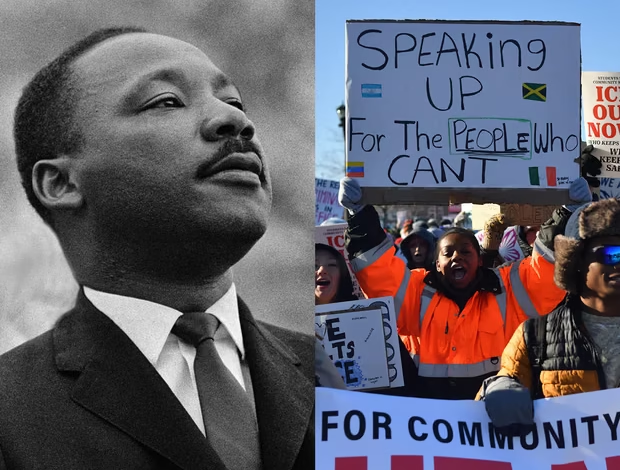
Each year, Martin Luther King Jr. Day arrives quietly for many families. Schools close, routines shift, and children often focus on the welcome break. Yet the purpose of the day reaches far beyond a long weekend. It is a moment set aside to help families reflect on fairness, courage, and responsibility, and to introduce children to a man whose ideas continue to shape the world they are growing up in.
Martin Luther King Jr. Day is observed on the third Monday in January, close to Dr. King’s birthday on January 15. It is a federal holiday, but it was designed to be a day of action rather than rest. Congress intended it to be a day of service, reflection, and learning. For families, this makes it a rare opportunity to slow down together and talk honestly about values that matter.
Why This Day Matters for Children
Children learn history best when it is tied to real people and clear ideas. Dr. King’s life offers both. He believed that all people deserve dignity, that injustice should be challenged, and that change can happen without violence. These ideas are not abstract. Children encounter fairness, exclusion, kindness, and courage every day at school, at home, and online.
Explaining MLK Day helps children understand that the freedoms they experience did not happen by accident. Many rights were won because ordinary people, including young people, chose to speak up and act together. Dr. King trusted children to be part of that change, and history proved him right.
Talking With Children About Civil Rights
Parents often hesitate to discuss racism and injustice, especially with younger children. The instinct to protect is natural. Still, children are already absorbing these realities through news, social media, and conversations with peers. MLK Day offers a thoughtful entry point.
For younger children, the conversation can begin with simple ideas. Some people were treated unfairly because of the color of their skin. Dr. King worked to change that. He believed everyone should be treated with respect. Older children can handle deeper discussions about laws, protests, and why inequality still exists today.
The goal is not to overwhelm children with pain or fear. It is to help them understand right and wrong, and to see that change is possible when people work together.
Dr. King’s Words and Why They Still Matter
Dr. King’s speeches and writings remain powerful because they speak plainly about human dignity. Sharing his words with children allows them to hear his voice directly. Quotes about judging people by character, choosing love over hate, and standing up for what is right invite reflection at any age.
Parents can ask children what they think these words mean in their own lives. How do they treat classmates who are different from them. How do they respond when something feels unfair. These conversations often reveal more than adults expect.
Meaningful Ways Families Can Mark the Day
Commemorating MLK Day does not require elaborate plans. Small, thoughtful actions often leave the strongest impression.
Reading together is one place to start. Many children’s books introduce Dr. King’s life and the civil rights movement in age-appropriate ways. Stories about courage, peaceful protest, and hope help children connect emotionally with history.
Watching films together can also spark discussion, especially for older children. Parents should choose carefully and be ready to talk afterward. Asking children what stood out to them encourages reflection rather than passive viewing.
Service is another powerful option. Families can volunteer locally, donate to causes they care about, or simply look for ways to help neighbors. The lesson is that honoring Dr. King means doing something, not just remembering his name.
Creative activities can help younger children express what they are learning. Drawing pictures, writing short reflections, or creating a family pledge about kindness and fairness can make the day memorable.
Education as a Lasting Tribute
Dr. King believed deeply in education. He saw learning as a path toward freedom and responsibility. On MLK Day, parents can reinforce this message by talking with children about their interests and dreams. Education is not only about personal success. It is also about using knowledge to improve the world.
Encouraging curiosity, critical thinking, and empathy is one of the most meaningful ways families can honor Dr. King’s legacy throughout the year.
More Than a Day Off
In recent years, public debates and political changes have caused confusion about how MLK Day is observed. While details such as park access or public events may shift, the meaning of the day remains unchanged. It is still a federal holiday. More importantly, it is still a moral invitation.
MLK Day asks families to move beyond comfort and routine. It asks parents to listen to their children’s questions and to take them seriously. It asks children to see themselves as part of a larger story, one that is still being written.
When families use the day to talk, learn, and serve together, they help keep Dr. King’s vision alive. Not as a distant chapter in history, but as a living set of values that guide how we treat one another, today and every day.