
Discipline Before Grades: Why Japan Won’t Test Children Until They’re 10
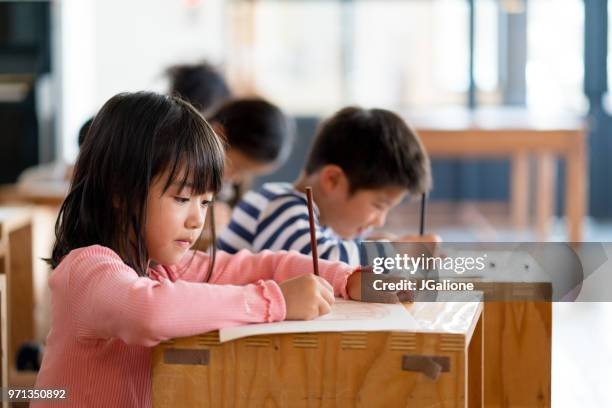
Japan has already begun implementing a nationwide education approach that delays formal exams and grades until children reach around 10 years old. The policy reflects a long-standing philosophy within the country’s school system, but its formal adoption has drawn renewed international attention as educators elsewhere question whether early academic pressure truly benefits children.
Under the current framework, the early years of schooling are being used to prioritise values formation, discipline, social development and personal autonomy rather than test performance. Academic learning still takes place, but progress is observed through daily interaction, teacher feedback and participation instead of formal evaluation.
The idea is not to reject achievement, but to postpone measurement until children are considered emotionally and socially ready to handle it.
Early Education Without Early Pressure
In many education systems, testing begins almost as soon as children enter school. Performance is recorded, compared and ranked, often shaping how students see themselves from a very young age. In Japan’s early education model, that pressure is deliberately reduced.
During the first years of school, emphasis is placed on cooperation, routine, responsibility and self-management. Activities such as shared classroom cleaning, group problem-solving and collective decision-making are treated as part of learning, not as extras.
It is believed that these practices may help children develop emotional regulation, patience and resilience before being exposed to formal assessment. However, educators acknowledge that the long-term academic effects of delaying exams are still being observed.
Mental Development as a Foundation
One of the aims of the policy is to allow mental and emotional growth to stabilise before performance is measured. Anxiety related to grades, fear of failure and early comparison with peers are common concerns in test-heavy systems. By removing formal exams in early childhood, it is hoped that learning can remain driven by curiosity rather than fear.
Children are given space to make mistakes without them being recorded or quantified. Confidence may be built through participation and effort rather than outcomes. Whether this leads to stronger academic engagement later on remains an open question, but the approach is designed to protect mental well-being during a critical stage of development.
Moving Away From Mass Production
Another question raised by the policy is whether education should be designed to sort children early or to understand them better first. Traditional testing systems often favour certain learning styles while overlooking others. Creative ability, leadership, empathy or practical intelligence can be difficult to capture in standard exams.
Without early grades, teachers are encouraged to observe students more holistically. Strengths may be identified through behaviour, collaboration, communication and problem-solving rather than scores alone. The intention is not to eliminate standards, but to delay sorting children into perceived categories before their abilities have fully emerged.
This raises the possibility that education could move away from producing uniform outcomes for economic systems and instead support a wider range of individual talents. Whether this balance can be achieved at scale is still uncertain.
An Experiment Still Unfolding
The system is being monitored, and its academic, social and psychological effects will take years to fully understand. What is clear is that Japan is choosing to ask a different question.
Instead of asking how early children can be tested, the focus has shifted to when testing is most meaningful. The answer is still being explored, but the policy has reopened a global conversation about what education is meant to produce and who it is meant to serve.