Man Expresses Love and Care to Terminally Ill Children, Exemplifying the True Meaning of Child Protection
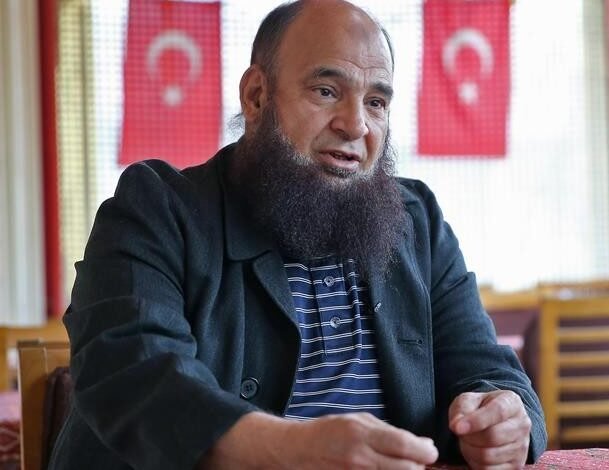
In a quiet Los Angeles home, children with no one left to claim them spend their final weeks wrapped in the arms of one man. Mohamed Bzeek, a 65-year-old widower, has made it his life’s mission to foster terminally ill children who would otherwise die alone in hospitals. For more than three decades, he has given them names, comfort and the simple dignity of being loved.
More than 40 years ago, Mohamed Bzeek arrived in the United States from Libya to study electronic engineering. He built a life, married, became a U.S. citizen and settled in Los Angeles. But it was not his career that defined him. It was a decision he and his late wife made in 1995: to open their home to children abandoned in hospitals or removed from their families because of abuse or neglect.
Since 1989, Bzeek has cared for around 80 children. Ten have died in his arms.
“The only house that accepts orphans and children who are about to die in Los Angeles is my house,” he once said. When the Department of Child Services identifies a child unlikely to survive, officials often call him first. If he does not step forward, the child may remain in a hospital setting without a permanent family.
In his home, the atmosphere is different. There are couches, home-cooked meals and steady hands. There is someone who stays.
Safe, loved and never alone
Many of the children Bzeek fosters arrive without even a name. Hospital paperwork often lists them simply as “Baby boy” or “Baby girl.”
“I name them,” he said in an interview. “I give them names.”
One child he welcomed into his home was born with an encephalocele, a condition in which part of the brain protrudes through an opening in the skull. Doctors predicted she would live only a few months. He brought her home at seven weeks old. Years later, she was still there, responding to touch, cradled gently in his arms.
Sophie Keefer, a pediatric palliative care worker who met Bzeek, described him as calm and matter-of-fact in the face of medical complexity. He prepared her for seizures, explained care routines and moved with quiet confidence. His home, she wrote, offered a sense of steadiness amid profound fragility.
For Bzeek, this is not charity. It is responsibility.
“I know it’s heartbreak,” he has said. “I know it’s going to hurt me. But we should help each other.”
Upholding a child’s right to survival and protection
Every child has the right to survival, care and protection, regardless of disability, diagnosis or circumstance of birth. In practice, however, children with life-limiting conditions are among the most vulnerable. They are more likely to be abandoned, institutionalized or left without consistent family support.
Bzeek’s work directly addresses that gap. He ensures that children facing the end of life experience stability, affection and human connection. In doing so, he upholds not only their right to medical care but also their right to dignity.
His efforts also reflect a broader truth: child protection is not limited to shielding children from harm. It includes ensuring that even the most medically fragile are not forgotten.
For the past four years, a nurse has assisted him daily so he can rest, run errands and pray at his mosque. Financially, he receives $1,600 a month from Los Angeles County for foster care support. After media attention in 2019, community members organized donations to help improve his home, including installing air conditioning.
Yet the scale of his contribution goes far beyond financial calculations.
A model for society
Bzeek has described how, when he was diagnosed with stage-2 colon cancer, he felt fear and isolation sitting alone in the doctor’s office.
“I felt the same what the kids feel,” he said. “They are alone. If I am 62 and I am scared, what about them?”
That reflection underscores the empathy at the core of his work. His care is rooted in the belief that no child should face illness or death without comfort.
Recognition of such humanitarian commitment should extend beyond awards or headlines. While he has received honors, including an International Benevolence Award, the broader significance of his example lies in what it teaches.
Governments and international bodies regularly affirm children’s rights in policy frameworks and conventions. Individuals like Bzeek demonstrate what those rights look like in daily life. His home becomes a living example of survival and protection not as abstract principles, but as acts carried out hour by hour.
Highlighting his story serves another purpose. It offers children and adults alike a model of compassion in action. It shows that safeguarding children is not solely the responsibility of institutions; it is also a moral obligation shared by communities.
In a world where vulnerable children can easily be overlooked, Mohamed Bzeek has chosen to see them, hold them and stand beside them until the end.
His work is caretaking. It is heartbreaking. And it is a powerful reminder that the protection of children is not optional. It is essential.