At Six, She Walked Into History: Ruby Bridges’ Courage Still Lights the Path for Generations
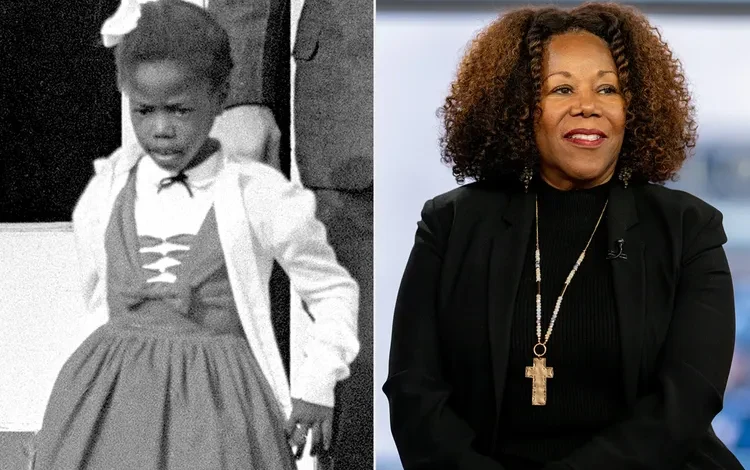
When Ruby Bridges stepped through the doors of an all-white elementary school in 1960, escorted by U.S. marshals and surrounded by angry crowds, she did more than integrate a classroom, she etched her name into American history. More than six decades later, her courage stands not only as a landmark in the civil rights movement, but as a living blueprint for how children, families, and community leaders can nurture resilience, moral clarity, and steady leadership in the face of adversity.
Ruby Bridges was just six years old when she became the first Black child to attend William Frantz Elementary School in New Orleans following the Supreme Court’s decision in Brown v. Board of Education. Each day, she walked past protestors and into a school building emptied of students. She spent her first year alone in a classroom with her teacher, Barbara Henry.
She never missed a day.
That image, a small child in a white dress walking between federal marshals, has become one of the most enduring visuals of the civil rights era. Immortalized in Norman Rockwell’s 1964 painting The Problem We All Live With, her quiet bravery is now embedded in textbooks, museums, and public memory. The former William Frantz Elementary School is preserved as a historic site. Bridges herself has been honored at the White House, inducted into the National Women’s Hall of Fame, and continues her work through the Ruby Bridges Foundation.
Her footsteps have become historical landmarks.
But her story is not frozen in the past. It remains a guidepost.
A Road Map for Young Leaders
Ruby Bridges did not set out to be a symbol. She was a child whose parents believed education mattered. Her mother, Lucille Bridges, understood the power of opportunity and encouraged her daughter to step forward, even when the cost was high.
That decision offers an important lesson for families today.
Courage in children does not appear overnight. It grows in environments where:
-
Parents affirm their child’s worth.
-
Adults explain injustice without instilling hatred.
-
Children are encouraged to ask questions and stand firm in their values.
Bridges has often said she did not fully understand the hatred around her at the time. What she did understand was that she was going to school. The stability and reassurance provided by her mother, along with the compassion of her teacher, created a protective foundation around her.
That foundation mattered.
The Role of Parents in Raising Courage
Parents play a quiet but decisive role in shaping children who can lead with steadiness rather than anger.
Practical ways families can nurture this include:
-
Teaching children how to respond calmly to conflict.
-
Modeling empathy, even toward those who disagree.
-
Encouraging persistence when tasks feel difficult.
-
Praising integrity over popularity.
Lucille Bridges did not promise her daughter the path would be easy. She prepared her for it.
When children feel secure at home, they are more likely to develop the confidence to navigate challenges outside it.
The Responsibility of Societal Leaders
Ruby Bridges’ story also highlights the responsibility of educators, policymakers, and community leaders.
Federal marshals ensured her physical safety. A teacher ensured her educational continuity. A psychiatrist volunteered to help her process the emotional strain. Each adult played a stabilizing role.
Societal leadership, at its best, creates systems where children can grow without being overwhelmed by adult conflict.
That means:
-
Schools that prioritize inclusion.
-
Leaders who protect safe learning environments.
-
Public figures who speak with responsibility.
-
Institutions that support children through change.
Children should never carry the full weight of social transformation alone. They need adults who act with foresight and restraint.
A Legacy That Endures
Today, Ruby Bridges continues to speak, write children’s books, and advocate for understanding across racial lines. The Ruby Bridges Foundation promotes tolerance and respect. Her statue stands in the courtyard of the school she once entered alone.
Her legacy is not one of outrage. It is one of endurance.
She reminds young people that meaningful change often begins with small, steady steps. She reminds parents that their encouragement can echo across generations. She reminds leaders that their choices shape the environments in which children learn and grow.
At six years old, Ruby Bridges walked into a school building.
In doing so, she walked into history.
And the path she cleared remains wide enough for every child with courage, and every adult willing to help them carry it wisely.