Nearly 5 Million Children Lost Before Age Five: What the Numbers Are Really Telling Us
In a world with unprecedented medical knowledge and innovation, the loss of 4.9 million children before their fifth birthday in 2024 is not just alarming, it is deeply unsettling. The latest findings from the United Nations Inter-agency Group for Child Mortality Estimation reveal a painful contradiction: while progress has been made, it is slowing at a time when acceleration is most needed.
Progress Has Happened But It Is Losing Momentum
Since 2000, global under-five deaths have been reduced by more than half. That is no small achievement. It reflects decades of investment in vaccines, maternal care, and child health systems.
Yet, beneath this progress lies a troubling reality: since 2015, the pace of reduction has slowed by over 60 percent. This slowdown is not just a statistic. It signals weakening systems, declining funding, and growing inequality in access to life-saving care.
The Preventable Causes We Continue to Allow
What makes this crisis particularly painful is that most of these deaths are preventable.
The leading causes are not rare or complex diseases. They are conditions we understand well:
- Severe acute malnutrition, directly responsible for over 100,000 deaths, while indirectly contributing to many more
- Infectious diseases such as malaria, pneumonia, and diarrhoea, accounting for nearly half of global under-five deaths
- Complications at birth, especially among premature babies
- Lack of skilled care during pregnancy and delivery
Malnutrition stands out as both a direct killer and a silent amplifier. It weakens children’s immune systems, making otherwise treatable illnesses far more deadly.
Newborns: The Most Vulnerable Window
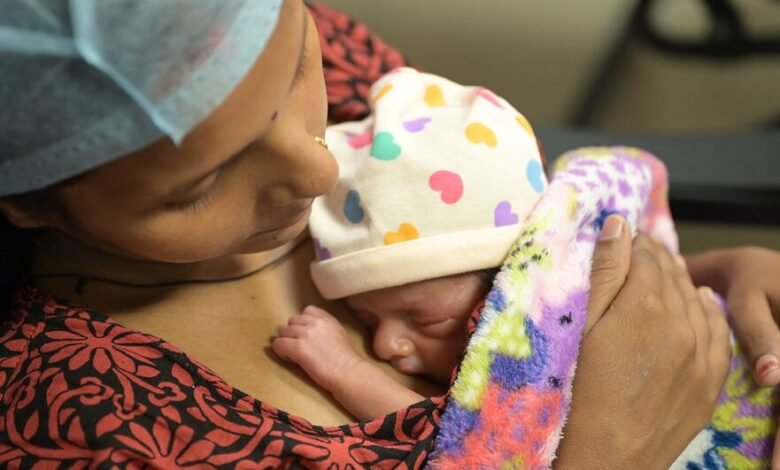
One of the most striking findings is that nearly half of all under-five deaths now occur within the first month of life. This tells us something important: survival is increasingly determined at the very beginning.
Complications from preterm birth, infections, and challenges during labour are leading causes. These are not issues that require futuristic solutions. They require:
- Skilled birth attendance
- Access to basic neonatal care
- Simple but effective practices such as Kangaroo Mother Care
Where a Child Is Born Still Determines If They Live
Geography remains one of the strongest predictors of survival.
Sub-Saharan Africa accounts for 58 percent of global under-five deaths, while Southern Asia contributes another 25 percent. Countries such as Nigeria, Chad, Democratic Republic of the Congo, and Niger carry a disproportionate burden.
In these regions, multiple factors converge:
- Weak healthcare systems
- Conflict and displacement
- Climate-related shocks
- Limited access to clean water and nutrition
- Emerging biological threats such as drug resistance
Children born into fragile or conflict-affected settings are nearly three times more likely to die before age five. This is not just inequality, it is systemic injustice.
Beyond Early Childhood: Risks That Evolve With Age
The report also reminds us that vulnerability does not end at age five.
Among children and young people aged 5 to 24, 2.1 million deaths were recorded in 2024. The risks shift:
- Among adolescent girls, self-harm emerges as a leading cause
- Among boys, road traffic injuries dominate
The Real Crisis: We Know What Works But We Are Not Doing Enough
Perhaps the most frustrating aspect of this crisis is that the solutions are neither unknown nor unattainable.
Proven, cost-effective interventions already exist:
- Vaccination programmes
- Nutrition support for mothers and children
- Skilled care during pregnancy and childbirth
- Access to clean water and sanitation
- Early diagnosis and treatment of common illnesses
A Call to Rethink Priorities
The continued loss of millions of children is not inevitable. It reflects choices, about funding, policy, and priority. At a time when global development financing is declining, essential maternal and child health programmes are under strain. The consequence is predictable: the most vulnerable children are left without the support they need to survive.
Investing in child health is not just a moral obligation, it is one of the most cost-effective development strategies available. It strengthens societies, economies, and future generations.
Conclusion
Every statistic in this report represents a life that could have been lived, a future that could have unfolded. The question is no longer whether we can prevent these deaths. The question is whether we will. Because ultimately, the survival of children is not just a health issue. It is a reflection of what we value, what we prioritize, and how seriously we take our collective responsibility to protect the most vulnerable among us.