ALONE
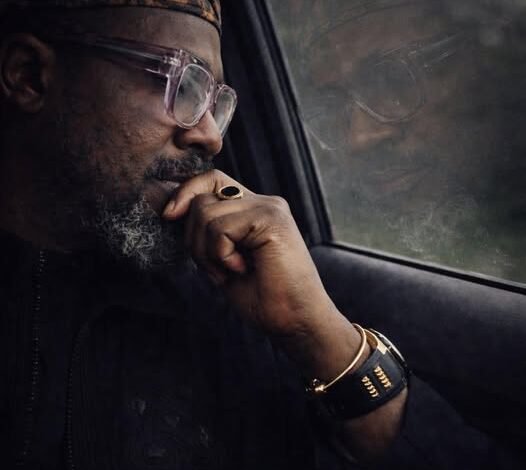
I love my family, my wife and my son. I love spending time with them, and when they are not around, I truly miss them. Yet one of the clearest spaces in my life, outside of being with them, is the space of being alone. Not lonely in the casual sense, but alone in the deeper sense: alone with thoughts, alone with memories, alone with a private inner world the outside world cannot always reach. Over time, solitude became both comfort and conditioning.
This story began early. As the first children (my twin brother and I), we grew up learning many things without the kind of protection, instruction, and emotional covering that helps a child feel safe.
Our parents were not wicked people; they did not know better. Still, gaps that are not filled in childhood tend to become burdens carried into adulthood.
Between ages six and eight, I was sexually molested regularly. That sentence is heavy, and it deserves to be treated with seriousness. What made it worse was not only what happened, but what followed: silence. There was nobody to tell, nobody to carry it with me, nobody to reassure me that it was not my fault. So I carried it alone, and the impact did not remain in childhood. It shaped how I saw myself and how I approached the world.
Home did not consistently provide refuge either. There were moments of abuse that left me feeling terrorized rather than protected moments where I felt helpless, restrained, and exposed. I remember being tied, beaten, and left for long periods. The strongest impression in those moments was not only the pain, but the absence of rescue. Nobody came. Nobody intervened. Nobody sat with me afterward to help me make sense of what had happened. So I woke up many mornings not wanting to go to school, not wanting to face people, not wanting to face another day, and I still went. I kept moving, not because support was present, but because life demanded movement and there was nobody to talk to.
School added another layer. In primary three, when I was about ten years old, my class teacher nicknamed me “devil.” Children avoided me. They would not play with me. I was labelled a “noise maker,” and that label pushed me into a corner. Even when I broke out of it, trying again and again to speak, to connect, to be present, the mark remained. The label later shifted from “noise maker” to “disturber,” but the message stayed the same: you are a problem, and you do not belong. A child who is repeatedly judged learns to hide. A child who is repeatedly rejected learns to withdraw. Those lessons can become lifelong habits.
The emotional injuries continued in school in other ways. My name was placed in the black book at Saint Joseph’s College, Ondo, an official record that reinforced the feeling of being defined by authority. And again, there was no safe path to say at home, “This is what is happening.” There was no adult advocacy I could depend on. So I learned to endure. Alone.
I carried that “alone” into my early adult years. At Lagos State University, I struggled to express the best of my thoughts at first. Eventually, I became involved in student unionism and leadership. Outwardly, I could be outspoken. Outwardly, I could stand in front of people. But inside, unresolved battles from childhood were still running. Leadership did not erase them. Achievement did not erase them. Even among people, the reflex of aloneness remained.
Before faith, there was also an internal voice that fought against me: “You cannot make it. You are a fool. Who told you you can do it?” I remember walking on the street, stopping, calling my own name, and pushing myself forward as though I had to become my own parent, my own coach, my own defender. Self-doubt and second-guessing did not appear from nowhere. They were planted by experience, watered by silence, and strengthened by repetition. Even now, I still talk to myself often. It is part of how survival was learned.
Later, I became a person of faith. I began to study the Scriptures, and I began to see and understand things differently. I began to fellowship with other believers. Faith gave me language, direction, and hope, but another truth also became clear: damage done over years is not undone in a day. Patterns formed in childhood do not vanish instantly. To this day, some of my deepest conversations happen in solitude. Some of my best reflections happen alone. And some of my hardest battles still try to happen alone.
In 2009, both my parents died in the same year. I was thirty-nine. My father died, and I realized something that is still difficult to say plainly: not once did he sit me down to talk to me about life, about manhood, responsibility, father to son. Not once. My mother died at sixty-seven that same year, and she also never sat me down to discuss life with me. This is not said to demonize them. They were not wicked people. But they did not know better, and what was not given became another gap I had to fill by myself.
Today, I am in a good place. This is not written from perplexity, and it is not a lamentation. It is a story with lessons because aloneness rarely comes from one cause. Many people stay alone because they fear judgment after being judged early. Many fear rejections after being rejected early. Some struggle with closeness because closeness once felt unsafe. Some delay asking for help because help never came when it was needed. When those patterns settle deep, maximizing relationships in adulthood becomes possible, but tough, especially when boundaries must be held and trust must be rebuilt slowly.
This is where the message becomes communal. We are beings of community. We are beings of relationships and relationship is cultivated from childhood. When children are ostracized, labelled, ignored, or left to process pain alone, they can grow into adults who feel lonely even in a crowd. If we want children to learn how to relate, we relate with them. We model safety. We make room for questions. We correct without crushing. We discipline without dehumanizing. We listen early, so silence does not become a life sentence.
This is why I cannot trade the relationship I enjoy with my son. I relate with him deliberately. We play, we run, we jump, we fall, we rise. Not only to fulfill his right to play, but to build relationship, physically, emotionally, and spiritually. I also want him to build a relationship with God his Maker, so we talk about God, we attend services, and we keep that conversation open and real.
Solitude is still comforting for me, and I sing to myself often. I carry a music catalogue in my brain, an ever-present companion. I do not enjoy parties or social gatherings, except when I am there on an assignment. At 55, it may sound strange, but I can probably count the number of parties I have attended in my life.
I have been to many countries, but when I travel away from home, I focus strictly on my assignment, moving from the venue to my room and back again. I do not usually join others for sightseeing. I remain very protective of my “alone.”
If my calling did not demand a public-facing role, I would likely have chosen a more secluded life, and I believe I would have enjoyed it. But I am learning that solitude should be a place of rest, not a prison. I am learning to embrace safe community without abandoning my boundaries. I am learning that strength is not only in enduring; sometimes strength is in speaking.
And sometimes healing begins when “alone” finally meets love that is consistent, community without judgment, and fellow travellers who have been comforted and, with the comfort they have received, comfort others.
But I will not lie about what made me. I know what it means to be alone. I have lived it, alone, alone, alone.
Do have an INSPIRED weekend with the family.