Children and Crimes Against Humanity: Why the Next UN Treaty Must Be Explicit
Nearly one third of the world’s population is under the age of 18. At the same time, an estimated 149 million children live in areas affected by high-intensity conflict. In these settings, children are not incidental victims of mass violence. They are often deliberately targeted, exploited, or permanently harmed by acts that fall within what the international community understands as crimes against humanity.
Crimes against humanity include murder, rape, enslavement, torture, persecution, and other acts committed as part of widespread or systematic attacks against civilian populations. Children are affected by all of these crimes, often in ways that are shaped by their age and stage of development. The physical, psychological, social, and economic consequences can extend across an entire lifetime.
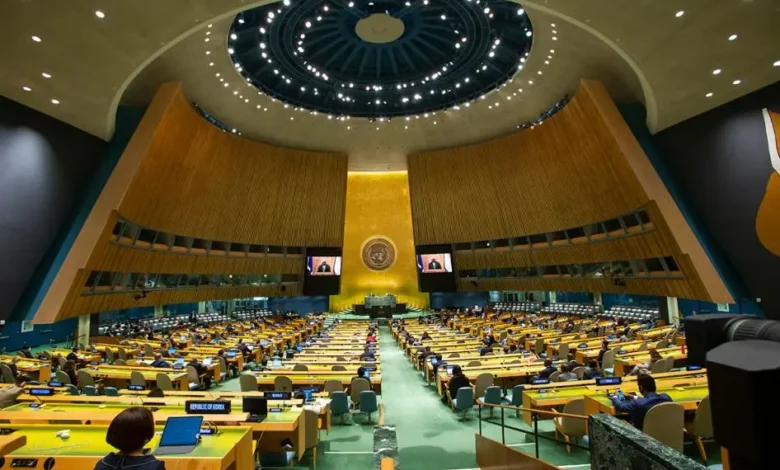
Despite this reality, international law has not yet developed a dedicated treaty on crimes against humanity. Unlike genocide and war crimes, there is no comprehensive convention that requires states to prevent these crimes or to prosecute or extradite those responsible. That gap is now being addressed. From January 19 to 30, 2026, diplomats will meet at the United Nations in New York to continue drafting a new Crimes Against Humanity treaty.
As this process moves forward, attention is increasingly turning to a significant omission in the current draft text: the absence of clear, child-specific provisions.
Why children require explicit protection
In May 2025, representatives from states, civil society, the United Nations, and academic institutions convened to discuss how a future treaty could better prevent harm, ensure accountability, and provide redress for children affected by crimes against humanity. The meeting followed the release of a briefing paper endorsed by 38 organizations and experts, calling for the treaty to explicitly address children’s experiences.
Opening the conference, Mexico’s Deputy Permanent Representative to the United Nations, Ambassador Alicia Buenrostro Massieu, underscored the stakes, noting the responsibility to build a treaty that does not leave children behind.
Over the past three decades, research and practice have deepened understanding of how children are uniquely targeted during mass atrocities. Examples include forced recruitment by armed groups, abduction, sexual violence, forced marriage, and enslavement. Children may also be harmed indirectly, such as by witnessing crimes committed against caregivers or being born as a result of rape committed during attacks on civilian populations.
These experiences can disrupt physical development, undermine mental health, fracture family and community ties, and limit access to education and economic opportunity. While adults may suffer severe harm from crimes against humanity, children often experience compounded and enduring consequences because of their dependence, vulnerability, and developmental needs.
Gaps in the current draft treaty
The current draft of the Crimes Against Humanity treaty makes only limited reference to children. They appear once in the preamble and once in the definition of enslavement, alongside women. There is no general definition of a child, no recognition of age-based persecution, and no explicit reference to crimes such as the recruitment and use of children by armed actors.
The draft also lacks provisions that would capture forms of harm that are specific to childhood, including separation from caregivers, coercion into exploitative roles, or long-term psychological injury caused by exposure to extreme violence. In addition, there is no guidance on how justice processes should address situations where individuals under 18 are accused of involvement in crimes against humanity.
These omissions matter. International justice mechanisms have historically taken an adult-centred approach, often failing to recognize children as distinct rights holders with specific needs. As a result, investigations have overlooked children’s experiences, and reparation programs have sometimes excluded them altogether.
Proposals for a child-sensitive treaty
The proposals endorsed by child rights organizations do not call for children to be treated simply as one among many “vulnerable groups.” Instead, they argue that children’s experiences should be explicitly reflected in how crimes against humanity are defined and addressed.
Key recommendations include:
-
Explicit recognition of child-specific crimes, such as age-based persecution, forced recruitment, and sexual violence committed against children.
-
Victim-centred provisions that account for distinctive harms, including being born of rape, forced displacement, or exposure to violence against family members.
-
Age-appropriate justice processes, ensuring that children accused of crimes are not prosecuted in adult systems and are treated in accordance with rehabilitative principles.
-
Accessible reparations, aligned with the Convention on the Rights of the Child, to support physical recovery, psychological healing, education, and social reintegration.
Experience from international and domestic justice efforts shows that such measures are both practical and effective when they are clearly codified.
A moment of decision
The upcoming negotiations at the United Nations represent a rare opportunity to shape a foundational legal instrument for decades to come. A Crimes Against Humanity treaty that assumes children will be protected without explicitly addressing their circumstances risks repeating the shortcomings of the past.
Ensuring that the final text clearly recognizes and responds to the realities faced by children affected by mass atrocities is not an act of advocacy alone. It is a matter of legal clarity, effectiveness, and credibility. A treaty that fails to account for nearly one third of the global population would be incomplete by design.
As states continue negotiations, the question is not whether children are affected by crimes against humanity. The evidence is well established. The question is whether the international community will choose to reflect that reality in law.
Children need protection that is visible, deliberate, and enforceable. The decisions made in this drafting process will determine whether the next global legal framework rises to that responsibility.
Source of image