Children on the Edge, UNICEF Chief Warns South Sudan Is Running Out of Time
South Sudan’s Children Trapped in a Growing Humanitarian Emergency, UNICEF Warns
Following a recent visit to South Sudan, UNICEF Executive Director Catherine Russell has issued an urgent call for stronger action to safeguard children whose lives are increasingly threatened by violence, climate disasters, and large-scale displacement.
Her trip revealed the worsening reality for children across the country. Millions are facing extreme hardship, with over two million children under five vulnerable to malnutrition. At the same time, nearly three-quarters of the population now relies on humanitarian aid to survive, stretching already fragile systems to their limits.
The situation has been further complicated by the arrival of almost 1.3 million refugees and returnees escaping the ongoing conflict in neighboring Sudan. Their arrival has intensified pressure on food supplies, clean water, and health services in communities that were already struggling.
Lives Uprooted by Conflict and Floods
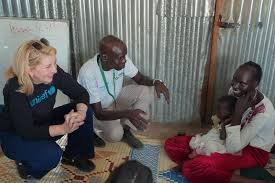
During her visit to Bentiu, Russell met families forced from their homes by flooding and violence. One mother described fleeing rising waters with her children, unable to save anything except a small keepsake belonging to her late father. Today, her young son, recovering from severe malnutrition , wears the necklace as a symbol of the life they were forced to abandon.
According to UNICEF, two out of every five children in South Sudan are at risk of acute malnutrition, particularly in regions affected by insecurity and extreme weather. Ongoing violence has also limited humanitarian access, cutting off vital supplies and support to communities most in need.
Girls and Women at Extreme Risk
The crisis is especially severe for girls. Child marriage remains widespread, and a significant majority of women and girls have experienced some form of violence. Russell visited a UNICEF-supported safe space that offers counselling, protection, and support for survivors.
There, she spoke with women and girls who shared harrowing accounts of abuse. Some revealed they had once considered taking their own lives before finding help. These centres provide critical lifelines , yet funding shortages have forced more than one-third of such safe spaces to shut down this year, leaving many without protection or support.
Preventable Suffering in Health Facilities
In Juba, Russell toured the country’s only pediatric hospital, where she witnessed children battling malnutrition and illnesses that could be prevented with adequate resources. Despite the dedication of health workers, shortages continue to limit the care available to the most vulnerable.
Russell emphasized that solutions exist and that sustained commitment from both national authorities and international partners could save countless lives.
Education: A Future at Risk
The crisis extends into the classroom or the lack of one. Nearly 2.8 million children remain out of school, placing South Sudan among the countries with the highest number of out-of-school children worldwide. Many schools lack trained teachers, safe buildings, and access to clean water and sanitation.
Girls are the most affected, often pushed out of education due to early marriage, insecurity, or unsafe learning environments.
A Call for Long-Term Commitment
Russell stressed that investing in education is essential not only for protecting children today but also for building lasting peace and stability. Education helps break cycles of poverty and violence and lays the foundation for a stronger future.
While acknowledging the impact of donor support over the years, she urged the government to increase domestic funding for essential services, calling children the country’s most valuable resource.
Without decisive action, the cost will be borne by an entire generation.