Chocolate’s Hidden Ingredient: Child Slavery | ENDEVR Documentary
Movie Review of the Week
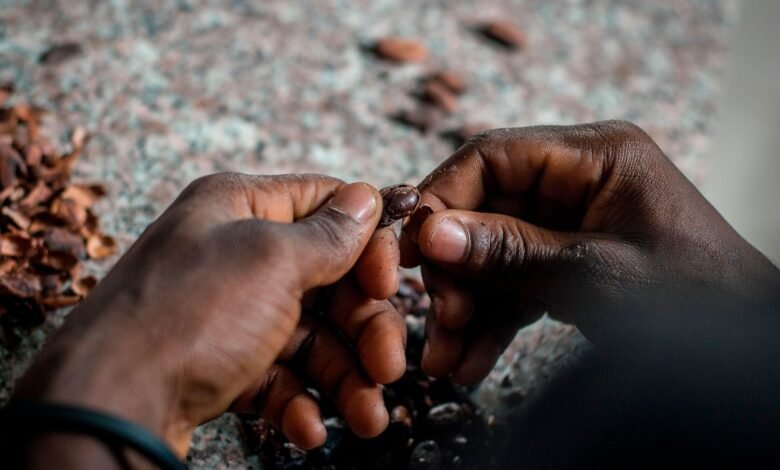
Chocolate is one of the most loved products in the world. Yet behind many chocolate bars lies a troubling reality that rarely reaches consumers. The investigative documentary “Chocolate’s Hidden Ingredient: Child Slavery”, part of The Chocolate War produced by ENDEVR, reveals the continued exploitation of children in the West African cocoa industry.
Two decades ago, major chocolate companies signed agreements promising to work toward eliminating child slavery in cocoa production. Despite these commitments, numerous investigations and international reports indicate that the problem has persisted. The documentary investigates how child exploitation continues within the cocoa supply chain despite global pledges and corporate sustainability programs.
At the center of the story is American human-rights lawyer Terry Collingsworth, who has spent more than a decade pursuing legal action against major chocolate corporations for their alleged connection to forced child labor in cocoa farming.
A Legal Fight Against Global Chocolate Giants
Collingsworth’s legal battle focuses on holding multinational corporations accountable for their alleged role in maintaining supply chains linked to exploitation.
His lawsuit targets two powerful companies; Nestlé and Cargill. The case argues that these corporations knowingly benefited from cocoa produced through the exploitation of children working on farms in Côte d’Ivoire.
The legal battle eventually reached the Supreme Court of the United States, highlighting the difficulty of holding multinational companies legally responsible for human rights abuses that occur within global supply chains.
The companies deny direct involvement, stating that they oppose child labor and do not control individual farms. They maintain that cocoa is purchased through intermediaries and that they have policies designed to discourage exploitative practices.
Following the Evidence in West Africa
The documentary follows Collingsworth over several years as he travels to Mali and Côte d’Ivoire to gather evidence and testimonies from former child workers.
During these visits, he meets individuals who were trafficked as children and forced to work on cocoa plantations. Many describe being recruited with promises of paid work, only to find themselves trapped in situations where they had little freedom and received no wages.
Some children reportedly began working as young as 12 or 13 years old, performing dangerous and physically demanding tasks such as harvesting cocoa pods with machetes, carrying heavy loads of beans, and clearing fields for planting.
Several former workers explain that leaving the farms was extremely difficult due to isolation, fear, or lack of resources. Some only managed to escape after years of labor.
Researchers estimate that around 1.5 million children are still involved in illegal labour in cocoa production across West Africa, a figure frequently cited in international discussions on the issue.
Child Trafficking, Exploitation, and Forced Labour
Beyond the immediate issue of child labor, the documentary also draws attention to the wider problem of child trafficking and forced labour networks that supply workers to some cocoa farms.
Child trafficking occurs when children are recruited, transported, or harbored for the purpose of exploitation. In parts of West Africa, traffickers reportedly move children across borders, particularly from poorer rural communities with promises of education, employment, or better living conditions. Instead, many end up performing agricultural labor under exploitative circumstances.
The International Labour Organization defines forced labour as work performed under coercion, threats, or deception where a person cannot freely leave the situation. In cases involving children, the risks are even more severe because minors are less able to resist exploitation or seek help.
Several patterns are often linked to trafficking and forced labour in agricultural sectors such as cocoa farming:
- Deceptive recruitment practices where children are promised wages or schooling.
- Cross-border movement from poorer regions into farming communities.
- Debt bondage, where children are told they must work to repay transportation or food costs.
- Isolation in rural plantations, which limits outside oversight.
- Lack of education, leaving children trapped in cycles of poverty and vulnerability.
These conditions do not affect only individual children. They also create broader social consequences, including disrupted education, long-term economic disadvantage, and intergenerational poverty.
The documentary highlights that combating child trafficking and forced labour requires coordinated efforts involving governments, corporations, international organizations, and local communities.
A System Driven by Economic Pressure
A key argument presented in the documentary is that child exploitation within cocoa farming is not simply the result of individual wrongdoing. Instead, it is closely tied to global economic structures.
Many cocoa farmers receive very low prices for their crops. With limited income, hiring adult workers becomes difficult, and some farms rely on cheaper labour including children to maintain production levels demanded by international markets.
The documentary also questions the effectiveness of industry-led monitoring programs meant to prevent child labor. Critics argue that inspections often cover only a fraction of farms and may rely heavily on voluntary reporting.
As a result, large parts of the cocoa supply chain remain difficult to monitor.
A Question for the Global Consumer
The documentary ultimately raises an important ethical question.
If the global market continues to depend on cocoa produced under exploitative conditions, who bears responsibility for changing the system?
For many people, chocolate is simply a small everyday pleasure. Yet The Chocolate War encourages viewers to look beyond the product and consider the human realities behind its production.
Understanding the links between child trafficking, forced labor, and global supply chains is an important step toward addressing a problem that affects some of the most vulnerable children in the world.
Watch the Full documentary here:
“Chocolate’s Hidden Ingredient: Child Slavery | ENDEVR Documentary” on YouTube.