
Florida Man Who Abandoned 5-Year-Old Girl to Die in Everglades Faces Death Penalty Again
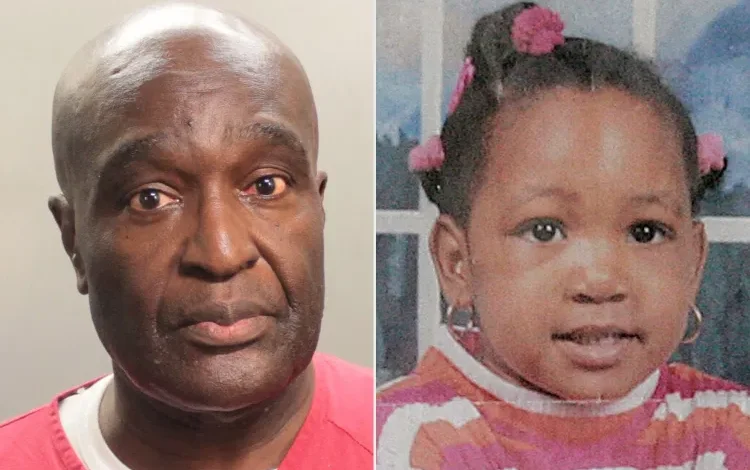
A decades-old South Florida murder case has returned to court as Harrel Braddy, a 76-year-old man convicted of kidnapping and abandoning a five-year-old girl who later died in the Everglades, faces a new sentencing hearing that could again result in the death penalty.
Braddy was convicted in 2007 of first-degree murder, attempted first-degree murder, kidnapping, and related charges in connection with the 1998 killing of Quantisha “Candy” Maycock and the assault and abduction of her mother, Shandelle Maycock. Although a jury originally sentenced him to death by an 11–1 vote, the sentence was overturned in 2017 after Florida courts ruled that death sentences must be imposed by a unanimous jury.
Changes to Florida’s death penalty laws have now reopened the case.
The Crime
According to court records, Braddy met Shandelle Maycock through a church acquaintance and had developed an unwanted interest in her. On the night of Nov. 7, 1998, he offered to drive her home from work and later agreed to take her to pick up her daughter, Quantisha, who was staying with a family friend.
After returning to Shandelle’s apartment, she asked Braddy to leave, telling him she was expecting company. Prosecutors said he refused and attacked her, choking her until she lost consciousness. When she regained consciousness, he attacked her again.
Court documents state that Shandelle later awoke in the back seat of a car, with her daughter in the front passenger seat and Braddy driving. When she attempted to escape, Braddy accelerated, causing both mother and child to fall from the vehicle. Braddy stopped, forced Quantisha back into the car, placed Shandelle in the trunk, and drove for up to 45 minutes.
Braddy later pulled Shandelle from the trunk, beat and choked her again, and left her in a remote area near the Broward–Palm Beach county line, believing she was dead. She survived, regained consciousness, and flagged down passing motorists, who contacted police.
Investigators say Braddy then drove Quantisha to a canal along Interstate 75, a stretch of road known as Alligator Alley, and abandoned her there alive. He later told authorities he left the child because he feared she could identify him.
Discovery and Cause of Death
Three days later, fishermen discovered the child’s body floating in a canal in the Everglades. Medical testimony presented at trial indicated that Quantisha suffered blunt force trauma to the head and was attacked by alligators while still alive or unconscious.
The Broward County Medical Examiner testified that the child’s left arm had been severed by an alligator after death and that she had multiple bite wounds to her torso and head, along with injuries consistent with falling from a moving vehicle.
A Case Revived by Law Changes
Braddy’s death sentence was overturned after the Florida Supreme Court ruled in 2017 that capital punishment required a unanimous jury recommendation, following a U.S. Supreme Court decision that struck down Florida’s previous sentencing scheme.
However, in 2023, Florida lawmakers revised the law again, allowing a death sentence to be imposed with an 8–4 jury vote. Prosecutors are now seeking to apply that statute in Braddy’s resentencing.
Jury selection began this week in Miami-Dade Circuit Court.
Criminal History
Court records show Braddy had a long and violent criminal history prior to Quantisha’s death, including convictions for robbery, kidnapping, and attempted murder. In the 1980s, he escaped from custody multiple times, assaulting law enforcement officers and a courthouse bailiff. He was released from prison in 1997, roughly a year before the killing.
Awaiting a New Verdict
Braddy remains incarcerated on multiple sentences related to the case as jurors hear evidence during the new penalty phase. The court will decide whether he should again be sentenced to death under Florida’s revised law or remain in prison for life.
The case is one of several high-profile death penalty resentencings underway in Florida, reflecting the continuing legal and moral debate over capital punishment nearly three decades after the crime that shocked the state.