How a Minnesota Playground Taught Children the Power of Kindness and Responsibility
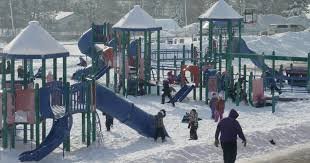
At Glen Lake Elementary School in Hopkins, Minnesota, recess used to come with an uncomfortable truth. While laughter filled the playground, some children could only watch. Students with physical disabilities had no wheelchair-accessible merry-go-rounds, no adaptive swings, and no equipment designed for them. Recess, a time meant for joy and inclusion, quietly became a reminder of who was left out.
The unfairness did not go unnoticed. In Betsy Julien’s fifth-grade classroom, students began asking the questions adults sometimes overlook. Why couldn’t everyone play? Why should some children sit on the sidelines simply because the playground wasn’t built for them?
Their teacher explained the reality. Inclusive playground equipment costs money. A lot of it. By her estimate, close to $300,000. The explanation was meant to clarify the challenge, not spark a movement.
But that is exactly what happened.
Instead of accepting exclusion as inevitable, the children decided to act. They started small, collecting spare change. Then they grew bolder. Bake sales followed. Flyers went up. Doors were knocked on. Businesses were cold-called. Restaurants agreed to donate a portion of their profits. What began as loose change turned into months of sustained effort, teamwork, and persistence.
These were not children playing fundraiser for a day. They were children learning responsibility in real time. They learned how to organize, how to ask for help, how to handle rejection, and how to keep going anyway. Most importantly, they learned that fairness is not just something you talk about. It is something you work for.
With support from the Glen Lake Parent Teacher Organization, the students eventually reached their goal. The money raised will help transform the playground into a space where children of all abilities can play side by side.
The story resonated far beyond the school grounds, not because of the dollar amount, but because of what it revealed about children when they are trusted with meaningful problems. These students were not motivated by praise or grades. They were motivated by empathy.
Experts in child development often say that kindness is learned best through action, not instruction. Glen Lake’s students did not sit through a lesson on inclusion. They lived it. They saw exclusion. They felt discomfort. And they took responsibility for changing it.
This kind of experience shapes how children see the world and their place in it. It teaches that community problems are not abstract. They affect real people. And even young people have the power to respond.
Parents and educators often wonder how to teach children values like compassion, responsibility, and civic duty. This story offers a clear answer. Give children the chance to notice injustice. Give them the tools to respond. Then step back and let them lead.
At Glen Lake Elementary, the playground will soon change. But the deeper transformation has already happened. A group of children learned that kindness is not passive, responsibility is not optional, and fairness is worth working for. That lesson will last far longer than recess.