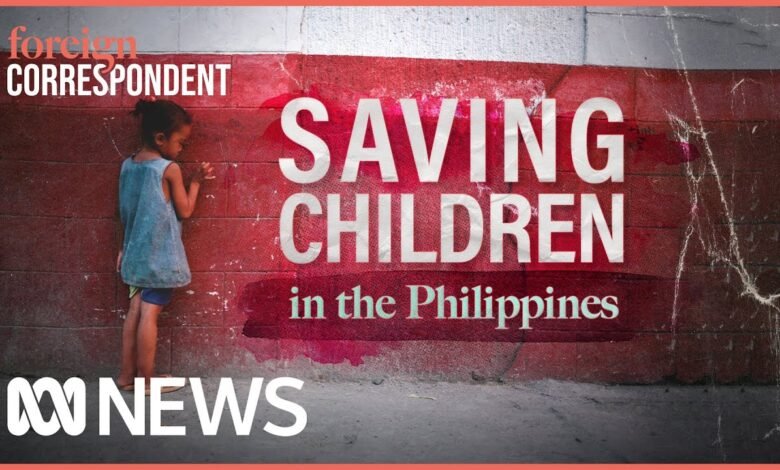
Inside the Global Taskforce Fighting Child Sex Abuse in the Philippines
ABC News In-depth | Foreign Correspondent
Overview
This Foreign Correspondent investigation offers rare, controlled access to an international taskforce working to combat online child sexual exploitation in the Philippines. Filmed largely at night and in real time, the documentary follows Filipino police, Australian Federal Police officers, and international investigators as they trace livestreamed Child Sexual Abuse back to its source and attempt to rescue the children involved.
Reporter Stephanie March does not position herself as an observer at a safe distance. She walks with police teams, waits through court delays, enters shelters, and conducts a stark prison interview with a mother accused of facilitating the abuse of her own child. The result is not sensational television. It is restrained, methodical, and deeply unsettling.
Key Issues Examined
-
Demand-Driven Abuse
The documentary makes clear that online child sexual exploitation is driven by foreign demand, particularly from Australia, the United States, and parts of Europe. Abuse is not accidental or hidden. It is ordered, paid for, and directed in real time. -
Technology as an Enabler
Encrypted messaging apps, livestream platforms, and digital payment systems allow abuse to occur across borders with speed and anonymity. Existing detection tools are largely ineffective against live abuse, leaving law enforcement permanently behind the curve. -
Family-Based Exploitation
One of the most confronting realities revealed is that many facilitators are parents or close relatives. This complicates rescue efforts and deepens the trauma for victims, who are often removed from the only family they know. -
Poverty and Accountability
The documentary carefully navigates the role of poverty without excusing abuse. While financial desperation is present in many cases, investigators and advocates reject the idea that poverty alone explains the exploitation of children. -
Psychological Cost of Rescue
Rescue is not portrayed as a clean or celebratory moment. Children are confused, fearful, and often distressed at being separated from caregivers. Trauma does not end with removal. It begins a long process of recovery.
What the Documentary Unveils
- The scale of online child sexual exploitation in the Philippines is far larger than many viewers may assume, with tens of thousands of reports annually.
- Livestreamed abuse is interactive, with offenders directing acts in real time from thousands of kilometres away.
- International cooperation is essential. Single arrests in Australia or the US can lead to the discovery of dozens of victims overseas.
- Law enforcement officers and social workers operate under intense emotional strain, often carrying the weight of cases they cannot resolve quickly enough.
- The crime destroys families on both sides. Children are abused. Parents are imprisoned. Communities fracture.
Lessons for Viewers
-
This Is Not a Distant Problem
The offenders are not abstract figures. They live in ordinary neighbourhoods and operate from private homes. -
Protection Requires More Than Policing
Law enforcement alone cannot solve the problem. Prevention, technology reform, education, and accountability in consumer countries are critical. -
Children Need Long-Term Care, Not Just Rescue
Removal from abuse is only the first step. Trauma-informed care, stability, and trust-building take years. -
Language Matters
Framing the crime as a result of poverty alone risks stripping perpetrators of responsibility and oversimplifying a complex moral failure. -
Silence Enables Harm
The secrecy surrounding online abuse benefits offenders. Awareness, uncomfortable as it is, is part of prevention.
Conclusion
Inside the Global Taskforce Fighting Child Sex Abuse in the Philippines is not easy viewing, nor should it be. It avoids shock tactics and instead relies on evidence, testimony, and quiet persistence. The documentary leaves viewers with no illusion that the problem is solved or even close to it. What lingers most is not the statistics, but the sound of a child crying in unseen footage, the waiting rooms where warrants hang in the balance, and the question posed at the end: if this demand originates in our communities, what responsibility do we carry?
Watch the Full Story:
“Inside the Global Taskforce Fighting Child Sex Abuse in the Philippines | Foreign Correspondent-ABC News In-depth” on YouTube.