
Maga Is Not an Isolated Tragedy: What 25 Abducted Girls Say About Nigeria’s Insecurity, Unsafe Schools, and Our Failure to Protect Children
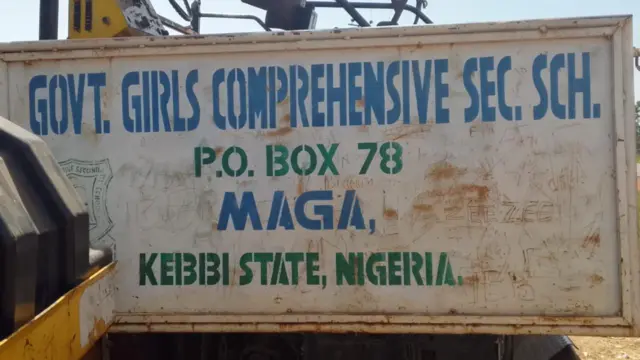
In the early hours of Monday, 17 November 2025, armed men stormed Government Girls’ Comprehensive Secondary School, Maga, in Kebbi State. They came under the cover of darkness, moved through the school compound with chilling efficiency, broke into the girls’ dormitories, killed at least one staff member who tried to resist them, and abducted 25 schoolgirls from their beds.
Sixteen years after Chibok, Nigeria has arrived at a place where sending a daughter to school is not a path to empowerment but a wager with tragedy, a delicate gamble between education and abduction, promise and peril, hope and horror.
For the families of Maga, the morning after was not dawn; it was darkness.
From Chibok to Maga: A Straight Line of Neglect
To understand Maga, one must understand that it is not an isolated event, it is the latest chapter in a long, unbroken chain of national failure.
In April 2014, 276 girls were abducted from Government Girls Secondary School, Chibok, Borno State. It was a moment that shocked the world, triggered international campaigns, and forced Nigeria into global headlines.
But what should have been a turning point became merely precedent.
As of 2024, 80–100 Chibok girls are still missing, trapped in the shadows of forests and insurgent camps, their fates uncertain, their lives suspended.
Between 2014 and 2024, more than 1,400 schoolchildren were abducted across Kaduna, Zamfara, Katsina, Niger, Borno, Yobe, and Kebbi States.
Amnesty International reported in 2023 that 98 Chibok girls remained in captivity, along with children from later kidnappings whose names and faces no longer make the news cycle.
Kuriga.
Kankara.
Dapchi.
Jangebe.
Afaka.
Birnin Yauri.
And now Maga.
These are not separate tragedies; they are coordinates on a map that traces the geography of impunity.
A map that tells a single story: Nigeria has failed to protect its children.
What began as insurgency has expanded into a multi-billion-naira kidnapping economy, a shadow industry where children are currency.
National Insecurity: When the Basics Collapse
Nigeria’s insecurity is often described as a “northern” or “Boko Haram” problem. But this framing is outdated and dangerously simplistic.
The country is now held hostage by overlapping forces, terrorists, insurgents, bandits, armed herdsmen, and criminal networks that exploit ungoverned spaces and porous borders. Communities are militarised zones. Highways are open-season hunting grounds. Villages live with the sound of gunfire as a constant background hum.
UNICEF’s education statistics paint a bleaker backdrop:
- 10.2 million primary-school-age children out of school
- 8.1 million junior-secondary-age children out of school
- 74% of children aged 7–14 unable to read or do basic maths
- 19 documented school attacks in 2022–2023
- 113 schools shut down across Borno, Adamawa, and Yobe due to insecurity
Across West and Central Africa, nearly two million children have been displaced from the classroom because the very spaces meant to protect and empower them have become targets.
This means:
- The Nigerian state is failing to get children into school.
- Insecurity is ensuring that those who do get in cannot stay in school.
And when a state cannot guarantee the physical safety of a child sitting behind a desk, we are no longer talking about governance challenges, we are talking about the disintegration of the social contract.
Unsafe Schools: Buildings Without Systems
Nigeria signed the Safe Schools Declaration, a global commitment to protect learning spaces during conflict. It also launched a Safe School Policy, promising to prevent attacks, protect learners, and ensure continuity of education.
On paper, the country is committed.
In reality, many schools remain:
- Unfenced or poorly fenced
- Without even the simplest early-warning systems
- Without trained safeguarding officers
- Without child safeguarding system
- Without emergency drills
- Without a single functional evacuation or lockdown protocol
UNICEF’s 2025 humanitarian report on the BAY states reveals a stark truth: Of 188,000 school-age children in IDP camps, only 57,606 are in school, because insecurity has either destroyed learning spaces or made them too unsafe to enter.
A boarding school where armed men can walk in at 4 a.m., kill staff, gather girls like cattle, and leave unchallenged is not a school.
It is an exposed camp masquerading as an educational institution.
Child Safeguarding and Protection: The Missing Infrastructure
Nigeria has laws:
- Child Rights Act 2003
- UN Convention on the Rights of the Child
- African Charter on the Rights and Welfare of the Child
These instruments impose a clear duty: protect children from harm, abduction, trafficking, and violence.
But laws do not safeguard children, systems do.
A functioning child-safeguarding ecosystem would include:
- Real Security Architecture
Schools should be treated as priority national assets, not soft targets.
This requires:
- Intelligence-led policing
- Proactive military deployment in high-risk LGAs
- Real-time communication between communities, vigilantes, and formal security agencies
- Community-based early-warning systems
- Mandatory Safeguarding Standard
Every school, public or private, should have:
- A written child-protection policy
- A code of conduct for staff and volunteers
- Controlled access to premises and dorms
- Continuous staff training on child safeguarding and protection and emergency response
- A clear incident-reporting protocol
- Accountability
After every school attack or abduction:
- There must be an independent inquiry
- Findings must be made public
- Sanctions must follow where negligence or complicity is established
- Survivor-Centred Response
Rescued children must receive:
- Trauma-informed psychosocial care
- Reintegration support
- Long-term counselling
- Confidentiality and protection from media exploitation
Currently, Nigeria’s child-safeguarding architecture is patchy, donor-dependent, reactive, and deeply inconsistent.
The result is predictable, and tragic.
The Cost: A Generation Living in Fear
Every abduction produces three categories of victims:
- The children who are taken
- The children who remain in school but live in fear of being next
- The children whose parents withdraw them from school entirely
After the 2024 Kuriga abduction, community leaders reported that many families, especially those with daughters kept their children home for months. The fear was too heavy, the risk too high.
Nigeria is slowly normalising a society where:
- Parents must choose between education and survival
- Schools must hire armed escorts
- Girls internalise the belief that they are bargaining chips in a conflict they did not start
A nation does not collapse suddenly.
It erodes quietly, through a million small concessions to fear.
What Must Change
If Nigeria wants to break this cycle, it must shift from rhetoric to structural change.
From episodic outrage to sustained pressure
Outrage fades; hashtags lose energy; but the systems remain the same. Change requires consistent advocacy, political will, and measurable demands.
From security as theatre to security as deterrence
Security deployments must not be photo opportunities.
They must be real, strategic, and credible enough that attackers fear consequences.
From blaming communities to resourcing them
Communities cannot fight well-armed attackers with bare hands. They need support, training, coordination, and integration into the national response, within legal and rights-based frameworks.
From seeing children as collateral to seeing them as central
Every education and security policy must start with one question:
“Does this protect the precious Nigerian children?”
If the answer is no, the policy is inadequate.
Maga Must Not Become Just Another Name
Chibok.
Dapchi.
Kankara.
Jangebe.
Kuriga.
Now Maga.
Each name carries the weight of terror, the cry of parents, the silence of the missing, the failure of a nation.
These are not headlines.
They are human beings.
They are daughters whose futures were stolen.
They are families trapped in grief without closure.
Nigeria cannot claim seriousness about development, democracy, or nation-building while failing the most fundamental duty of a state: The protection of its children.
Until Nigeria builds a coherent, disciplined, and enforceable system that protects schools, prioritises children, and punishes perpetrators, we will continue to revisit this same tragedy, different locations, different faces, same story.
The 25 girls of Maga are not only victims of gunmen.
They are victims of a country that has not yet decided that no child is expendable.
If any humanity remains in us, this must be the line we refuse to cross again.