
Movie Review of the Week: Nawi: Dear Future Me
Reframing “Child Marriage” Through Story, Law, and Conscience
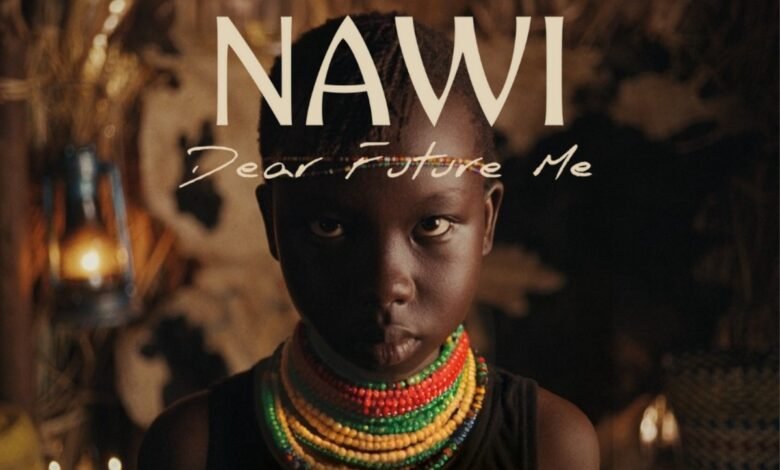
“60 sheep, eight camels, and 100 goats.”
Spoken quietly, almost matter-of-factly, these words land in the chest of every viewer like a slow, heavy stone. This is the price placed on a thirteen-year-old girl. Not her dreams. Not her dignity. Not her future. Just her body, traded for livestock like any other transaction in a marketplace. It is this haunting arithmetic that sets the moral and emotional tone of Nawi: Dear Future Me, Kenya’s bold, beautiful, and deeply unsettling official submission to the 97th Academy Awards.
And it is an arithmetic the world must stop calling by the wrong name.
The Story
Set against the sweeping, sun-scorched landscape of the Turkana region in northwestern Kenya, Nawi tells the story of its eponymous heroine, a thirteen-year-old girl who is the brightest student in her region. Played with extraordinary raw authenticity by Michelle Lemuya Ikeny (who deservedly won the African Movie Academy Award for Best Promising Actor), Nawi carries within her the quiet fire of a girl who has dared to dream beyond the boundaries her world has drawn for her. She wants to go to high school. She wants a future written in her own hand.
Then she learns her father is selling her.
The buyer is a much older man. The currency is livestock. The justification is tradition. And on her wedding night, Nawi runs.
That act of flight; desperate, terrified, yet luminously brave is the beating heart of this film. It is not merely a girl running from a marriage. It is a child running from the erasure of her very personhood.
What the Film Gets Right
What makes Nawi: Dear Future Me cinematically exceptional is not just what it shows, but how it shows it. Director and production teams resist the temptation to sensationalize. There is no voyeurism here. The horror is rendered in the ordinary, in the casual conversations of men who see a child as an asset, in the resigned silence of Nawi’s three mothers who have lived this story themselves and see no other way, in the gap between a father’s love for his daughter and his deeper loyalty to a system that devours her.
This is a film that understands that the most insidious forms of violence are those wrapped in the language of normalcy. Of culture. Of destiny.
The Turkana landscape itself becomes a character; vast, ancient, indifferent to individual suffering, yet breathtaking in its beauty. It is the perfect metaphor: a world of profound magnificence that has, for too long, tolerated profound cruelty.
A Question of Language: What Are We Really Watching?
Here is where this review must pause and go deeper than most film criticism allows, because Nawi is not merely a film to be appreciated. It is a film to be reckoned with.
Africa’s foremost Family Attorney, Family Strengthening and Child Safeguarding Innovator and Parenting Ideologue, doyen of the field of Family Strengthening and Child Safeguarding Culture Practice, Mr. Taiwo Akinlami has made a compelling argument that demands serious consideration: the very phrase “child marriage” is a linguistic trap. By attaching the word “marriage”, a sacred, legally recognized institution to what is done to children, we inadvertently lend it a veneer of legitimacy. We soften the crime with ceremony. We dress abuse in cultural clothing.
Akinlami’s position is unambiguous: a child cannot, by any legitimate definition of marriage, enter one. Marriage requires capacity, the psychological and physiological maturity to make binding life decisions. It requires consent, genuine, informed, uncoerced agreement. And it requires consummation, for which a child, under every framework of law and human decency, cannot give valid consent. Strip away the ceremony, the livestock, the blessings of elders, and what remains is what Mr. Akinlami calls “Domesticated Child Sexual Abuse or Molestation.”
Nawi understands this truth viscerally, even if it does not state it in those terms. When Nawi’s father accepts the offer of livestock for his daughter, the film does not frame this as a wedding negotiation. It frames it as a transaction in flesh. When the older man arrives to claim her, the camera does not romanticize. It shows a child’s terror. When Nawi runs, she is not defying a husband. She is escaping an abuser, one whose abuse has been sanctioned, celebrated, and dressed in tradition.
To watch Nawi through Mr. Akinlami’s lens is to watch it with unblinking clarity. The film becomes not just a story about one girl in Turkana. It becomes an indictment of every society; African, Asian, Middle Eastern, and beyond that has chosen the comfort of euphemism over the protection of children.
The Weight of Womanhood in This Film
Nawi’s three mothers deserve their own meditation. These women are not villains. They are survivors of the very system that is consuming their daughter. Their silence is not indifference; it is the resignation of those who have been silenced so long they have forgotten they once had a voice. Their presence in the film is among its most quietly devastating elements, a generational portrait of what happens when girls become women without ever being allowed to be children.
The film’s greatest social indictment is perhaps this: that the machinery of child exploitation is maintained not only by men with power, but by women who have internalized their own powerlessness. Breaking this cycle requires more than changing men’s minds. It requires liberating women’s voices.
A Film Born From the Community
There is something profoundly poetic about Nawi‘s origin. The script written by first-time writer Cherotich, emerged from a national writing contest, a collaboration between FilmCrew Media, Baobab Pictures, and the Turkana-based NGO Learning Lions, an organization dedicated to educational empowerment for young people in the region. This is not a story imported from the outside and projected onto a community. This is a community telling its own story, holding up a mirror to itself, and daring to ask: Is this who we want to be?
That courage, both on screen and behind the scenes is rare. It is what separates Nawi from well-intentioned but externally conceived “issue films.” The ache in this film is real because the people who made it know the ache personally.
Why You Must See This Film
Nawi: Dear Future Me is not easy viewing. It is not meant to be. But it is necessary viewing for parents, for educators, for policymakers, for anyone who believes that a girl’s potential is not a commodity to be traded for cattle.
It is a film that has rightfully earned over 25 international awards since its release. It is a film playing in theaters across North America as of March 2026, carrying its urgent message to new audiences. And it is a film that asks each viewer a pointed, personal question: What language are you using? And does that language protect children or protect the system that harms them?
If Nawi does nothing else, let it compel us to answer that question honestly.