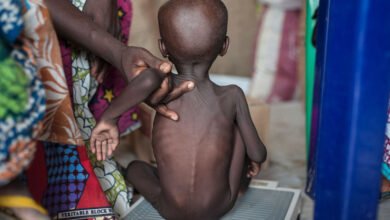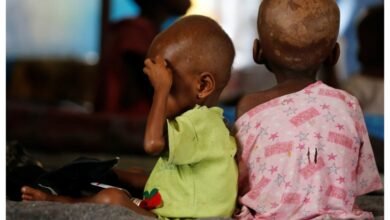
Nigeria’s Hunger Crisis: Millions of Children Fight for Survival as Malnutrition Overwhelms Health System
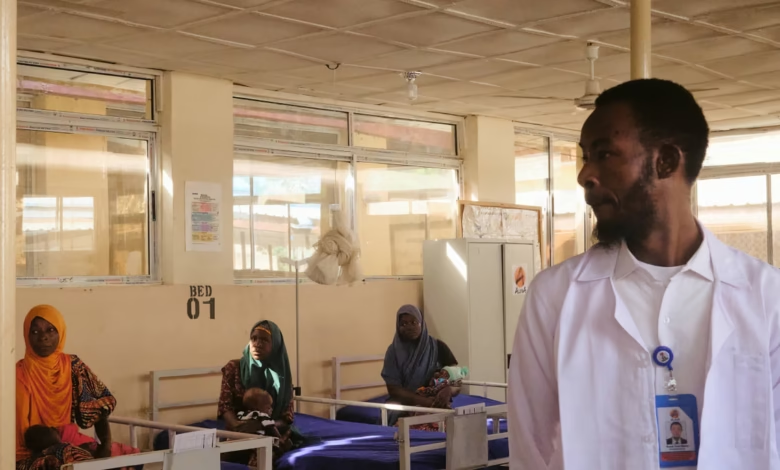
Nigeria’s worsening hunger crisis is raising urgent concerns about children’s fundamental right to survival, as millions face life-threatening malnutrition amid overstretched healthcare services and limited access to essential care.
At a healthcare facility in Kaita, Katsina State, medical workers are treating a continuous stream of severely malnourished children, many of whom arrive in critical condition. For these children, survival depends on timely medical intervention, yet delays, overcrowding, and limited resources make that increasingly difficult to guarantee.
The facility, operated with support from humanitarian partners, has become a critical lifeline for families in the region. However, the volume of cases reflects a broader crisis that is pushing survival prospects for vulnerable children to the brink. Many children arrive accompanied by young mothers, some of whom are also malnourished, highlighting the intergenerational nature of the problem and the fragile conditions in which these children are born and raised.
Estimates indicate that about 6.4 million Nigerian children could be acutely malnourished by the end of 2026, with the majority in northern states. Malnutrition significantly weakens a child’s immune system, increasing susceptibility to disease and reducing the chances of recovery without prompt and adequate treatment. For many, access to such treatment is neither immediate nor guaranteed.
Insecurity in some regions has further restricted movement and access to healthcare services, leaving many communities cut off from timely assistance. Combined with shortages of healthcare workers, limited funding, and inconsistent supply chains for essential medicines and therapeutic foods, these barriers continue to threaten children’s chances of survival.
Experts warn that when children cannot access adequate nutrition and healthcare, their right to survival is directly compromised. They emphasize that survival is not only about being alive at birth but about having sustained access to the conditions necessary to live and thrive, including food, healthcare, and protection from preventable illness.
As the hunger crisis deepens, stakeholders are calling for urgent and sustained interventions to strengthen nutrition support, improve healthcare access, and ensure that no child is denied the basic conditions required to survive in their earliest and most vulnerable years.