Nigeria Launches HOPE-EDU Reform to Advance Children’s Right to Education, But Will Implementation Follow?
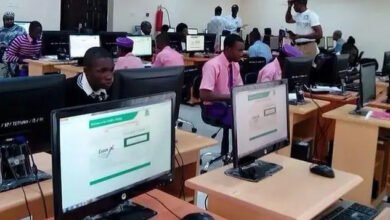
Nigeria has launched a new education reform initiative, HOPE for Quality Basic Education for All (HOPE-EDU), aimed at addressing the country’s persistent out-of-school crisis and advancing children’s right to development through education.
However, as the programme begins to roll out, key questions are emerging about whether the reform will move beyond policy announcements to real implementation that changes the lives of millions of children.
The initiative was unveiled by the Nigerian government as part of broader efforts to improve learning outcomes, expand access to quality basic education, and strengthen education systems across participating states.
Speaking during a three-day sensitisation workshop for stakeholders from the South-south and South-east regions in Uyo, Akwa Ibom State, the Executive Secretary of the Universal Basic Education Commission (UBEC), Aisha Garba, said Nigeria must confront the scale of its education crisis.
Represented by UBEC’s Deputy Executive Secretary (Technical), Rasaq Akinyemi, Garba noted that more than 10 million children are currently out of school, while overcrowded classrooms and uneven distribution of resources continue to undermine equitable access to education.
Estimates from the United Nations Children’s Fund (UNICEF) place the figure even higher, suggesting that about 18.9 million children in Nigeria remain outside the formal education system, making the country one of the worst affected globally.
Education advocates note that education is a core pillar of children’s right to development, providing not only learning opportunities but also protection from risks such as child labour, exploitation, and early marriage.
Under the HOPE-EDU reform, the government plans to improve learning outcomes for more than 29 million children, empower 500,000 teachers, construct 13,000 classrooms, and bring over 1.5 million out-of-school children back into classrooms.
Minister of Education Tunji Alausa confirmed that $552 million has already been unlocked to support the initiative, describing it as the fastest activation of education financing of this scale in Nigeria’s history. The programme is co-financed by the World Bank and the Global Partnership for Education.
Yet stakeholders stress that policy declarations alone will not fulfil children’s right to education. For HOPE-EDU to deliver meaningful impact, experts say the focus must now shift to transparent implementation, monitoring, and sustained investment to ensure the reforms reach the children who need them most.