Review of the Week: Olga Tokarczuk’s Autobiographical Sketch From a Family Strengthening and Rights-Based Parenting® Perspective
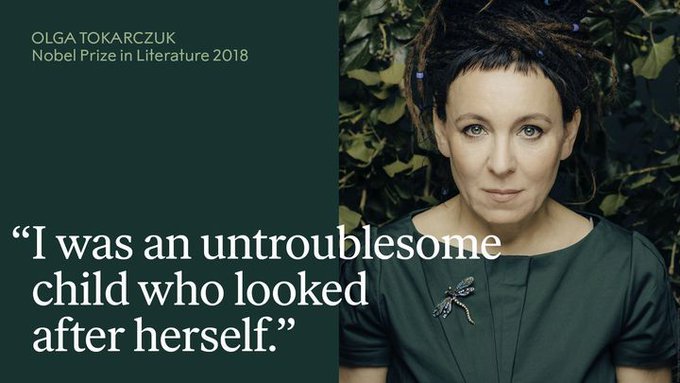
Olga Tokarczuk’s autobiographical sketch stands apart from conventional life narratives by rejecting linear achievement, institutional validation, and measurable outcomes as the primary indicators of human development. From a Family Strengthening and Rights-Based Parenting® perspective, this work offers a compelling counter-narrative to contemporary child-rearing models that prioritise performance over formation.
This is not a sentimental account of childhood. It is a rigorous, reflective testimony to how identity, resilience, and moral orientation are shaped long before formal systems intervene.
Identity as a Foundational Right
Tokarczuk’s identity emerges not through formal markers of success but through place, memory, and sustained attention to the world around her. Her self-description as a “daughter of the Oder” affirms a core principle of Rights-Based Parenting®: a child’s right to identity is relational and embodied, not symbolic or administrative.
Children belong before they achieve. They are shaped by the environments that hold them, the landscapes that name them, and the stories that explain where they come from. Parenting that ignores this right produces rootless competence rather than grounded maturity.
Family as the First Structure of Protection
In Tokarczuk’s childhood, family is not a private unit sealed off from society, nor a mechanism of control. It is a living structure of values, linking home, education, community, and service. Her parents’ roles as teachers and community builders provided consistency, meaning, and moral direction without overregulation.
From a Family Strengthening perspective, this reflects parenting that protects without constricting, and guides without dominating. The freedom Tokarczuk experienced was not permissiveness. It was trust, anchored in presence and shared purpose.
The Right to Inner Life and Psychological Safety
Tokarczuk’s most enduring memories are internal rather than ceremonial. She remembers solitude, observation, wandering, and reflection. Rights-Based Parenting® recognises this as the child’s right to an inner life, a space where imagination, curiosity, and identity can develop without constant adult intrusion.
Safeguarding, in this sense, extends beyond physical protection. It includes protecting the child’s capacity to think, feel, and wonder independently. A child who is never alone with their thoughts is as compromised as one who is physically unsafe.
Libraries as Family-Extending Institutions
The public library appears in Tokarczuk’s narrative as a quiet yet powerful ally in her development. Within a Rights-Based Parenting® framework, libraries function as family-strengthening institutions, offering children dignity, intellectual freedom, and equal access to knowledge regardless of background.
They compensate where families lack material resources and reinforce a child’s right to education that nourishes rather than standardises. In this sense, the library becomes a shared act of care between family and society.
Intergenerational Memory as a Safeguarding Tool
The stories Tokarczuk absorbed from her grandparents served as anchors in a region marked by historical rupture and displacement. From a Family Strengthening perspective, this transmission of memory is protective. It guards against cultural amnesia and identity erosion.
Rights-Based Parenting® recognises intergenerational storytelling as a form of safeguarding. A child who knows the stories of those who came before them inherits resilience, continuity, and a sense of place in the world.
Moral Responsibility and Social Consciousness
Tokarczuk’s engagement with psychiatric patients during political crisis reflects an ethic central to Rights-Based Parenting®: children raised with strong values are not insulated from suffering but taught how to respond to it. Her temporary withdrawal from writing underscores the belief that personal ambition must sometimes yield to collective responsibility. This models parenting that prepares children not only to succeed, but to care.
Writing as World-Building, Not Self-Exposure
In Tokarczuk’s account, writing is an act of synthesis. It connects fragments, holds contradictions, and resists simplistic narratives. This mirrors the work of families themselves, balancing stability and movement, belonging and exploration. Her rejection of linear biography reflects an understanding that human development is cyclical, layered, and relational. Parenting that expects straight lines produces fragility rather than depth.
Conclusion
From a Family Strengthening and Rights-Based Parenting® perspective, this autobiographical sketch affirms that the most decisive work of parenting happens quietly; in freedom allowed, stories shared, places honoured, and curiosity protected. Tokarczuk’s life reminds us that before children are trained for systems, they must be rooted in meaning. Before they are managed, they must be known. Before they are measured, they must be formed.