
San Francisco Takes on Food Giants, Saying Children’s Health Has Been Sacrificed for Profit
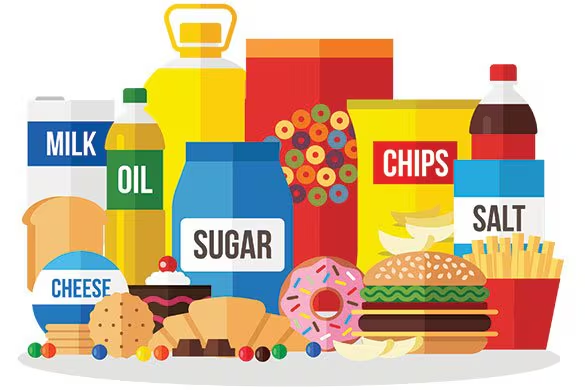
In what city officials describe as a fight for children’s right to a healthy future, San Francisco has filed a groundbreaking lawsuit against some of the world’s largest food corporations, accusing them of profiting from ultra-processed foods while communities shoulder the long-term health costs, particularly for children.
The lawsuit, filed by City Attorney David Chiu, marks the first time a U.S. city has taken legal action against food manufacturers over the public health harms of ultra-processed foods, commonly known as UPFs.
Why Ultra-Processed Foods Raise Child Protection Concerns
Ultra-processed foods are industrial products made with additives rarely found in home kitchens, including preservatives, artificial colors, emulsifiers, and flavor enhancers. They often contain little to no whole food content.
According to public health estimates cited in the lawsuit, more than 70 percent of the U.S. food supply is ultra-processed. Children are particularly affected, with more than 60 percent of their daily calories coming from these products.
From a child protection standpoint, this matters because children have limited control over what they eat and are heavily influenced by marketing. Research shows UPFs are linked to obesity, type 2 diabetes, heart disease, depression, cancer, and cognitive decline. These conditions increasingly appear earlier in life, placing children on a path toward chronic illness before adulthood.
The Lawsuit and Its Claims
The lawsuit targets major food corporations, including Coca-Cola Company, PepsiCo, Kraft Heinz Company, Nestlé USA, General Mills, Kellogg, Mars Incorporated, Mondelez International, ConAgra Brands, and Post Holdings.
San Francisco accuses the companies of unfair and deceptive marketing, arguing they knowingly sold products that contribute to disease while promoting them as safe, convenient, or healthy. The city is seeking damages to cover the public costs of treating diet-related illnesses, including healthcare, education support, and long-term social services.
Children’s Right to Good Health at the Center
At the heart of the case is the argument that access to nutritious food is not simply a consumer issue but a children’s rights issue. Public health experts cited by the city argue that children are uniquely vulnerable to the harms of ultra-processed foods due to biological development, marketing exposure, and reliance on adults and institutions for meals.
When food systems prioritize profit over nutrition, the lawsuit argues, children pay the price through lifelong health consequences. The city maintains that protecting children’s health should take precedence over corporate earnings.
Rare Political Alignment on Ultra-Processed Foods
The lawsuit has created an unusual moment of political alignment. Even officials from the Trump administration have criticized ultra-processed foods.
Former President Donald Trump’s health and human services secretary, Robert F. Kennedy Jr., has publicly warned about the dangers of foods high in added sugar, salt, dyes, and preservatives. While San Francisco officials disagree with Kennedy on many health issues, they argue that scientific evidence on UPFs is indisputable.
California’s Broader Child Health Actions
California has already taken steps that align with child protection goals. The state passed the first U.S. law defining ultra-processed foods and laid groundwork for banning them in schools. It has also restricted certain food dyes linked to behavioral issues in children.
San Francisco itself has a long history of public health action, including lawsuits against tobacco companies, lead paint manufacturers, and opioid distributors, as well as bans on free toys in fast-food meals.
Why Business Leaders Are Being Challenged
Beyond the courtroom, the lawsuit sends a broader message to the food industry. Business leaders are being urged to look beyond profit margins and consider their responsibility to protect children’s health.
Advocates argue that when evidence shows products harm children, reformulation, transparency, and ethical marketing are not optional. They are obligations. Continuing to sell and promote harmful products to families, the city argues, violates both public trust and children’s fundamental right to grow up healthy.
A Potential National Turning Point
Public health experts say the case could set a national precedent, forcing food manufacturers to rethink how products are made, marketed, and labeled, especially when children are the primary consumers.
For San Francisco, the message is clear. Children should not grow up paying the price for corporate profit. Protecting their right to good health, the city argues, is not just a moral duty but a legal one.