Spotlight of the Month – Amika George: Turning Period Equity into Educational Justice
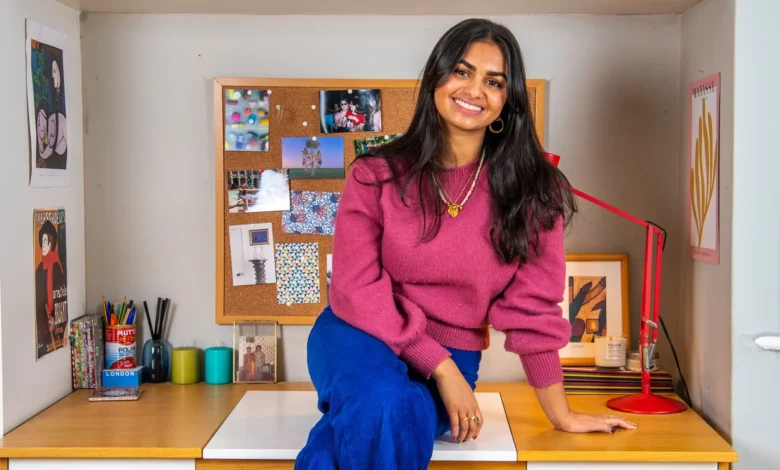
Amika George is a British activist and author whose work has reshaped how governments, schools, and societies respond to period poverty and in doing so, has directly advanced access to education for millions of children and young people.
Born in 1999 in London to parents of Indian heritage from Kerala, South India, Amika grew up in the UK and was educated at Murray Edwards College, University of Cambridge, where she studied History. Her journey into activism began not through institutional power, but through awareness and moral clarity.
As a teenager, Amika read an article describing how girls in the UK were missing school because they could not afford sanitary products or felt deep shame around menstruation. That moment became a turning point.
“We need to make it very clear that we want to see equal access to education for all young people,” she later said.
At just 17 years old, while still in secondary school, Amika launched a petition addressed to Westminster. It gained over 200,000 signatures, signalling that period poverty was not a private issue, it was a public failure. In April 2017, she founded the #FreePeriods organisation from her bedroom.
What followed was one of the most impactful youth-led education campaigns in modern Britain.
Through sustained advocacy, protests, and coalition-building, #FreePeriods successfully lobbied the UK government to provide free menstrual products in all English state schools and colleges, a policy implemented nationwide in 2020. The campaign reframed menstruation not as a personal inconvenience, but as an educational equity issue.
Amika organised public demonstrations and advocacy events featuring high-profile voices, including Adwoa Aboah, Suki Waterhouse, Jess Phillips, and Daisy Lowe, amplifying the message that no child should miss education because of their body.
Beyond policy change, Amika has been consistent in naming the human cost of period poverty. She has spoken openly about how young people who menstruate resort to unsafe alternatives like using toilet paper, clothing, or wearing the same tampon for days, practices that place them at serious health risk. She has also emphasized the importance of educating boys and men so that tackling menstrual stigma becomes a shared responsibility, not a gendered burden.
In 2021, Amika published Make It Happen: How to Be an Activist, a practical guide designed to equip young people with the tools to create change in their own communities. That same year, she was appointed a Member of the Order of the British Empire (MBE) for services to education, becoming the youngest recipient on the Queen’s Birthday Honours list.
Her global recognition reflects the scale of her impact. Amika has been named among TIME’s 25 Most Influential Teenagers and received a Goalkeepers Campaign Award from the Bill & Melinda Gates Foundation. She has written for Vogue, The Guardian, and The Telegraph, contributing to public discourse on youth activism, education access, and social justice.
At just 26 years old, Amika George represents a generation of leaders proving that safeguarding education requires confronting uncomfortable realities like poverty, stigma, and silence with courage and clarity.


