
Suspension of Sachet Alcohol Ban Raises Fresh Child Protection Concerns
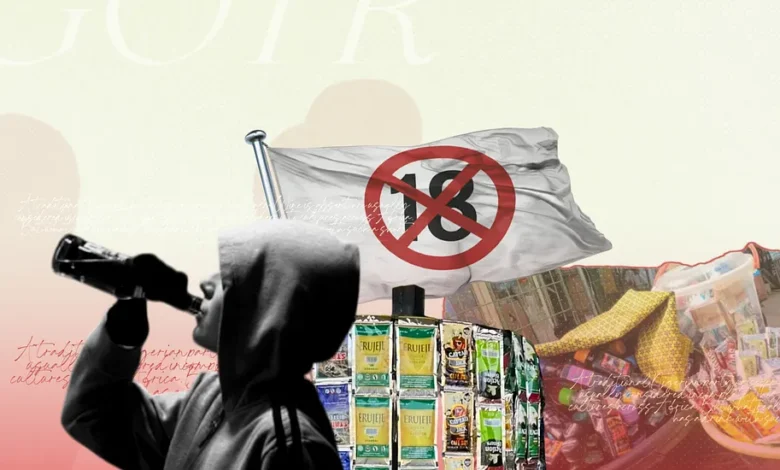
The Federal Government’s directive suspending enforcement of the ban on sachet alcohol has shifted the debate from regulation to responsibility. While officials cite economic and security considerations, child-rights advocates warn that the pause risks weakening safeguards designed to protect children from early exposure to alcohol.
At the centre of the issue is a simple question: when public health, economic stability, and child protection appear to collide, which interest should prevail?
A Pause with Consequences
The directive instructing the National Agency for Food and Drug Administration and Control (NAFDAC) to halt factory shutdowns and warehouse sealing pending full implementation of a National Alcohol Policy has been framed as a procedural correction. Government officials argue that enforcement without a harmonised policy framework could destabilise supply chains and affect livelihoods.
However, from a child protection perspective, the suspension creates uncertainty around a measure that had been positioned as a preventive shield for children.
When enforcement is paused, access remains unchanged. Sachet alcohol products continue to circulate in communities, including informal retail settings where oversight is weak. In such environments, children remain exposed to products that are inexpensive, discreet, and easy to obtain.
The Best Interest of the Child
Nigeria’s Child Rights Act 2003 establishes that the best interest of the child must be the primary consideration in all actions concerning children. The Act guarantees children the right to survival and development, protection from abuse, and the right to grow in a safe and healthy environment.
Internationally, the United Nations Convention on the Rights of the Child and the African Charter on the Rights and Welfare of the Child impose similar obligations. These instruments require that states take appropriate measures to protect children from harmful substances and practices that may impair their health or development.
From this standpoint, any delay in measures intended to reduce children’s exposure to alcohol raises legitimate concern. The issue is not whether adults may lawfully consume alcohol. The issue is whether children can easily access it.
Exposure in Everyday Spaces
In many communities, sachet alcohol is sold in roadside kiosks, open markets, and informal stalls. The small packaging allows it to be concealed in school bags or pockets. Age restrictions, while existing on paper, are often weakly enforced in informal settings.
Where regulation is inconsistent and monitoring capacity is stretched, availability becomes a gateway. Early exposure to alcohol has been linked to increased risks of dependency, impaired cognitive development, poor academic performance, and behavioural challenges.
Child-rights advocates argue that prevention must begin with reducing accessibility. When products are cheap, portable, and widely distributed, children are more likely to experiment.
Economic Concerns Versus Protective Duty
The Federal Government has emphasised the potential economic disruption that could result from abrupt enforcement, including job losses and supply chain impacts. These concerns are not insignificant.
However, child protection frameworks do not treat economic convenience as equal to a child’s right to health and development. Public policy is expected to weigh long-term societal costs against short-term commercial benefits.
The long-term social costs of widespread underage drinking include increased health care burdens, higher rates of substance dependence, and potential links to crime and school dropout. These consequences affect families, communities, and national development.
From a safeguarding standpoint, prevention is less costly than remediation.
A Policy Gap That Must Be Closed
Government officials have indicated that enforcement will remain suspended until the National Alcohol Policy is fully implemented. This places urgency on ensuring that the policy, once operational, contains strong child-protection safeguards.
If enforcement gaps persist, the risk remains that children will continue to encounter alcohol in everyday spaces without meaningful barriers.
Child-rights groups are likely to monitor whether the final framework includes:
-
Clear retail restrictions near schools and children’s spaces
-
Strong penalties for sales to children
-
Community-level monitoring mechanisms
-
Public awareness campaigns specifically targeting underage access
Without such measures, suspension may be perceived not as a technical pause but as a retreat from child-centred reform.
A Test of National Priorities
The involvement of national security offices signals that the matter has implications beyond health regulation. Yet child protection itself is a matter of national security. A generation exposed early to substance misuse carries long-term consequences for stability and productivity.
Safeguarding children is not achieved solely through declarations. It requires consistent policy, coordinated enforcement, and the political will to withstand commercial pressure.
The suspension of enforcement has reopened debate. What remains to be seen is whether the final outcome will reinforce or dilute protections for children.
At its core, the issue is not about packaging size. It is about whether children’s right to health, safety, and development will remain central in national decision-making.