“The Schools That Break Children” (BBC Eye Documentary, December 2025)
A Disturbing Exposure of Abuse and Discipline Gone Wrong
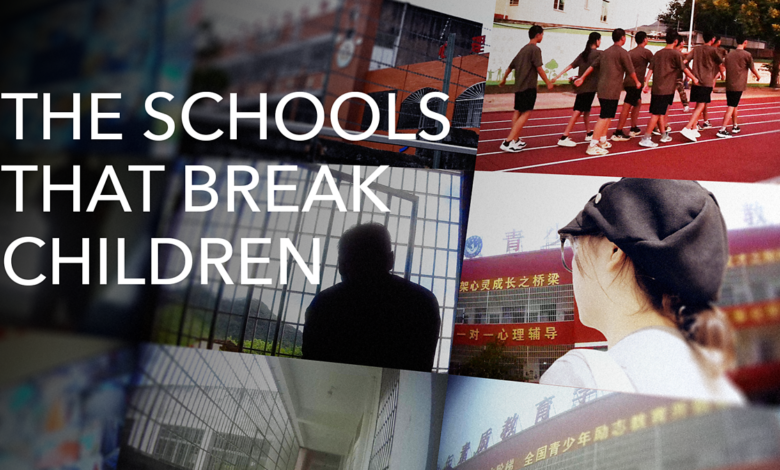
The Schools That Break Children, a BBC Eye investigative documentary released in December 2025, confronts the world with the devastating consequences of discipline divorced from dignity, protection, and child-centred values.
This investigation exposes the brutal reality of so-called “military-style” disciplinary schools in China, institutions that promise desperate parents quick solutions to complex adolescent challenges, yet deliver harm, trauma, and lasting damage to children and families.
While the setting is China, the questions raised by this documentary are global, urgent, and deeply relevant to parents, educators, policymakers, and anyone committed to the best interests of the child.
What the Documentary Uncovers
1. Abduction Disguised as Discipline
One of the most chilling revelations is how these schools collude with parents to forcibly remove teenagers from their homes. Staff members pose as police officers or government officials, abducting children in broad daylight, sometimes with physical restraint.
Thirteen former students interviewed described being taken against their will, deceived, restrained, and transported to remote institutions under false pretences. Consent, where it existed, was parental, not the child’s, raising profound ethical and legal questions about agency, protection, and abuse of authority.
2. Systemic Physical, Emotional, and Sexual Abuse
The BBC collated testimony from 23 former students across five schools linked to a network run by, or associated with, a former military veteran, Li Zheng. Their accounts reveal a pattern of abuse rather than isolated incidents.
Students reported being beaten with pipes, subjected to extreme physical exercises far beyond reasonable training, publicly humiliated, and psychologically broken. Some described severe bruising, hearing loss, and long-term physical consequences.
Even more disturbing are allegations of sexual assault and harassment by instructors. Survivors describe invasive body searches, inappropriate touching, and, in at least one case, rape. These allegations expose a catastrophic failure of safeguarding and oversight in environments that claim to “correct” children.
3. Criminalising Childhood and Identity
These institutions aggressively market themselves as solutions for what they label as “problem behaviours”, internet use, depression, dating, disobedience, and critically, gender and sexual identity. Children strugling with mental health, identity exploration, or family conflict are treated as threats to be subdued rather than human beings to be supported.
4. A Profitable Industry Built on Fear
The documentary reveals a booming industry where parents pay between 30,000 and 65,000 yuan for six months, often receiving no academic education in return. Some schools even offer “warranties”, allowing children to be sent back repeatedly if they relapse into undesirable behaviour.
Despite corporal punishment being banned in China for decades, these institutions continue operating through regulatory loopholes, rebranding, and relocation. When public pressure mounts, schools close temporarily, reopen under new names, or move children between sites to avoid inspection.
Rethinking Discipline and Embracing the Culture of Discipline
In response to this alarming trend, we call on parents, caregivers, and educators to pause and reflect.
1. Promote Positive Discipline
Discipline is not violence. Discipline is a culture, one that teaches through modelling, consistency, values, and relationship. Children learn best when they feel safe, respected, and seen, not when they are afraid.
2. Choose Empowerment Over Imposition
Children are reasoning beings. They do not learn life skills through force or humiliation. They learn through guidance, dialogue, and opportunity. Our children are not dumping grounds for our unfulfilled expectations or societal anxieties. They are individuals with unique paths. Our role is not to impose identity or destiny, but to provide support, boundaries, and belief in their capacity to grow.
3. Create Friendly, Safe and Secure Environments
Children thrive in environments where they can express themselves without fear, where mistakes are treated as learning opportunities, not crimes. We must move away from the archaic “culture of punishment” toward a meaningful “culture of discipline”, one that preserves dignity, reinforces worth, and equips children to protect themselves emotionally, socially, and ethically.
History and global practice offer powerful counter-examples.
Barack Obama has openly acknowledged experimenting with marijuana in his youth. His caregivers responded with guidance and accountability, not brutality. Had they chosen punishment over understanding, the world might have lost a transformative leader.
Similarly, Iceland’s prevention-focused, relationship-driven approach to youth development has produced some of the most well-adjusted young people globally, demonstrating that empowerment, not fear, builds resilience.
Conclusion
A society cannot afford to jeopardize the destinies of its children in the name of correction. The Schools That Break Children reminds us that when discipline loses its moral compass, it becomes abuse, and when adults abandon responsibility, children pay the price. Discipline is not judgment. It is a pathway to growth, healing, and transformation.
Watch the Full Story:
“The Schools That Break Children” (BBC Eye Documentary, December 2025) on YouTube.