New Research Reveals Boys Are Less Happy Than Girls at School
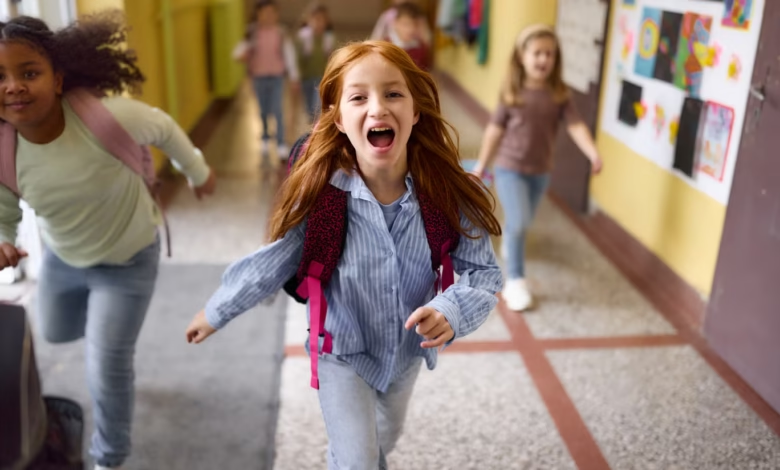
A major new study has found that girls report significantly higher wellbeing and happiness at school than boys, sparking fresh concern among child protection experts that the school environment may be failing children, particularly those whose emotional and social needs are not being met. The findings underscore the urgent need for stronger safeguarding practices, improved peer connection, and greater support for all children’s wellbeing at school.
Boys Report Lower Wellbeing at School
Norwegian researchers surveyed more than 1,600 children between first and fourth grade and found that girls reported higher levels of happiness and a stronger sense of connection with their classes compared with boys. The study suggested that girls’ wellbeing was linked to having more supportive friendships, while many boys struggled to feel comfortable in long days of classroom sitting and conventional school routines.
Experts point out that wellbeing at school is not just about enjoyment; it is closely tied to children feeling safe, supported, and connected, key safeguarding priorities in environments where children spend a large portion of their day.
Why School Wellbeing Matters for Protection
Wellbeing at school affects both immediate and long-term outcomes for children. Poor wellbeing has been linked to lower attendance, disengagement, behaviour issues, and declining mental health. A review of research on child wellbeing shows that school culture, relationships with peers and adults, and social connectedness are essential protective factors for children’s mental and emotional health.
When children are not thriving in school, it can be a red flag pointing to deeper safeguarding needs. Children who feel isolated or misunderstood may be more subjected to bullying, depression, or risky behaviours, all of which require coordinated support from teachers, parents, and child protection professionals.
Boys’ Lower Wellbeing: A Safeguarding Concern
School should be a place of safety and growth for every child. When a consistent pattern emerges showing that boys are less happy or engaged than girls, this signals a need for schools to examine how their environments meet the diverse needs of students.
Wellbeing research has shown that supportive climates, strong relationships with caring adults, and a sense of belonging can significantly reduce feeling unsafe or disconnected. These same protective factors can help prevent harm and promote resilience in children.
If boys are more likely to internalise boredom or frustration rather than express it, adults need enhanced training in recognizing subtle signs of distress, ensuring that no child’s suffering goes unnoticed.
What Safeguarding Systems Must Address
Child protection experts say schools need to evolve beyond traditional academic focus to include wellbeing and mental health as core priorities:
-
Enhanced training for teachers to recognise and respond to emotional struggle, not just behavioural issues.
-
Peer support programs that foster inclusive friendships and help children form meaningful connections.
-
Regular wellbeing checks in addition to academic assessments, so that children’s emotional state is monitored and supported.
-
Safe reporting channels, where children can raise concerns about bullying, isolation, or stress without fear of stigma.
The Broader Settings: Wellbeing Across Childhood
Other research shows that children’s wellbeing has declined over recent years in many countries, with mental health and life satisfaction dropping for both boys and girls. Schools are central to addressing this, as supportive educational environments can buffer stresses from home or social pressures.
Moreover, findings suggest that when children feel connected at school, when they believe they belong and are understood, risks of truancy, misbehaviour and disengagement decrease. This sense of belonging has been linked to better academic outcomes and increased emotional resilience.
How This Affects Children’s Rights
Every child has a right to a safe, supportive learning environment that promotes both their education and wellbeing. International standards on child rights emphasise the importance of protection from harm, opportunities for healthy development, and environments where children’s voices and experiences are considered.
When any child, whether a boy or a girl, feels unhappy or unsafe at school, it represents a breach of these rights. Schools and communities must respond by creating environments where emotional wellbeing is treated with the same seriousness as academic achievement.
Looking Ahead: Building Safer, Kinder Schools
This research is a wake-up call. Schools and policymakers must integrate wellbeing into educational design and child protection strategies. That means:
-
Encouraging active learning and movement, which can help meet diverse needs that traditional classroom settings sometimes overlook.
-
Empowering children with tools for social and emotional learning.
-
Involving parents and caregivers in wellbeing initiatives, ensuring continuity between home and school support.
Wellbeing is not optional. It is part of keeping children safe, happy and ready to thrive in all aspects of their lives, from friendships and learning to mental health and lifelong resilience. Schools that respond to these needs actively protect children’s present and future wellbeing.