
Girls Are Children Too: Equal Education in Science Is a Right Not a Favour
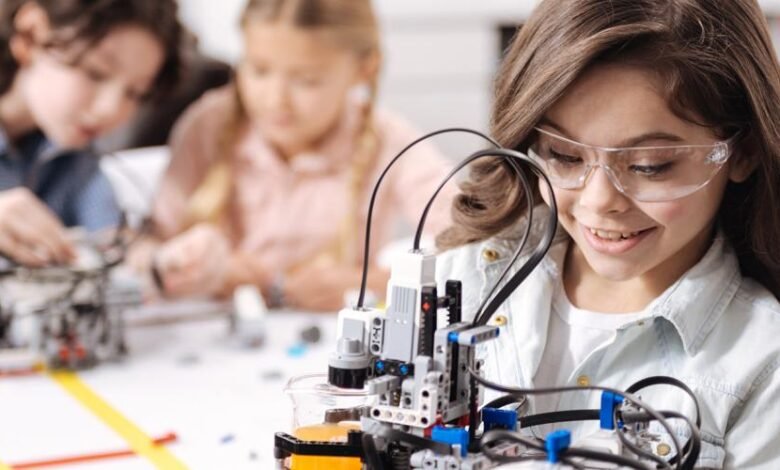
The recognition of female children through the International Day of Women and Girls in Science is widely understood as an affirmation that girls are children in the same sense as boys and, therefore, are entitled to the same rights, care, and opportunities. Education in science, technology, engineering, and mathematics is presented not as a gender-based privilege but as a universal right. By making this distinction clear, the false separation between the educational value of boys and girls is challenged, and equality from childhood is strongly reinforced.
Equal Right to Education and Development
Through this global observance, it is emphasized that girls, like boys, deserve the same level and quality of education. Access to scientific learning, research opportunities, and innovation spaces is recognized as a right that must be equally protected for all children. When girls are encouraged to learn, explore, and innovate alongside boys, confidence is built and long-standing barriers rooted in discrimination are weakened. Educational equality is thus promoted as a foundation for balanced social development.
Inclusivity as a Pathway to Social Unity
The celebration is not positioned solely as a means of promoting inclusivity but also as a strategy for strengthening unity within society. When girls and boys are educated on equal terms, cooperation, mutual respect, and shared responsibility are fostered. Gender equality in science is therefore framed as a unifying force, helping to reduce division and promote collective progress rather than competition between genders.
Institutional and Policy Commitment to Equality
Through platforms supported by UNESCO and the United Nations, attention is drawn to the need for policies that protect girls’ educational rights and promote gender-balanced participation in science. These efforts are aligned with the goals of the 2030 Agenda for Sustainable Development, where equality and empowerment are recognized as central to sustainable global progress.
Long-Term Impact on Society
In the long term, the recognition and celebration of women and girls in science are used to reshape societal attitudes and expectations. Girls are supported in seeing themselves as capable contributors to scientific advancement, while boys are raised within a system that values equality and cooperation. Through this shared framework, rights are upheld, unity is strengthened, and a more inclusive future for all children is actively promoted.