Micro-Schools for Millions: A Child-Centered Review of Shagaya’s Vision and the Safeguarding Questions It Raises
This is a review of a paper by Sim Shagaya, Founder and Group CEO of uLesson, and Chancellor of MIVA Open University, titled:
“A Vision for Basic Education: How Thousands of Small, Community-Embedded Micro-Schools Will Cut Education Costs by 70% and Close Nigeria’s Access Gap.”
In the article, Shagaya argues that Nigeria cannot solve its education crisis with large, centralized schools alone. With 18.3 million children out of school, he proposes a faster, more affordable solution: thousands of small, community-based micro-schools powered by technology.
By using existing neighborhood spaces and digital learning platforms, he believes education can become cheaper, more accessible, and more responsive to each child’s needs.
You can find the link to the full article below;
This review examines the article through a child-centered lens
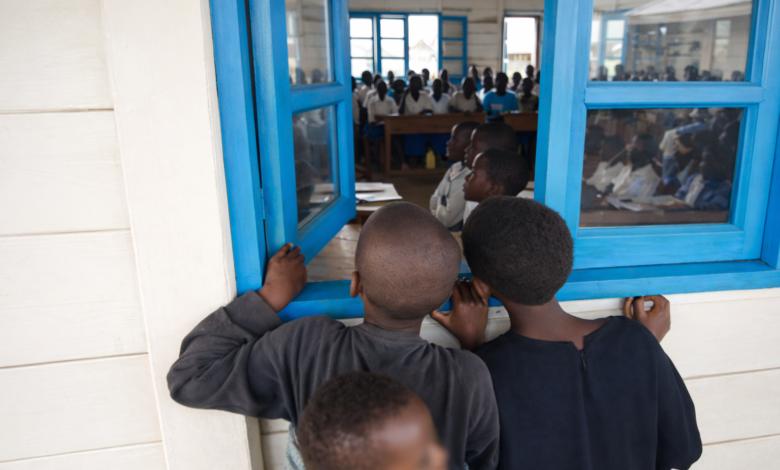
The figure of out of school children includes 10.2 million of primary school age and 8.1 million of junior secondary school age . Behind each number is a child with potential that is slowly fading. A girl who wants to be a doctor but has never stepped inside a science lab. A boy who is curious about technology but has never touched a computer. When children are locked out of school, the country does not just lose students. It loses engineers, teachers, entrepreneurs, and innovators who might have built its future.
The scale of this crisis means that traditional solutions are too slow. Large centralized schools require land, construction, staff, transport systems, and years of bureaucracy.
Meanwhile, childhood does not pause. Every year out of school pushes a child further from opportunity. If Nigeria is serious about securing its future, it must focus on solutions that move at the speed of childhood.
A School Around the Corner
The micro-school model offers something simple but powerful: proximity. Instead of commuting long distances, children walk five minutes to a neighborhood space already familiar to them, such as a church hall, mosque annex, or spare room in a compound . For a child, this changes everything. School no longer feels distant or intimidating. It feels reachable.
Being close to home improves safety and reduces fatigue. A child who does not spend hours in traffic arrives alert and ready to learn. Parents feel less anxious. Communities become involved. Education stops being a remote institution and becomes woven into daily life. For children, that sense of belonging builds confidence. And confident children grow into confident citizens.
Smaller Classrooms, Bigger Attention
In overcrowded classrooms of 40 or 50 students, many children fall behind quietly. A struggling reader may never be noticed. A gifted math student may never be challenged. Micro-schools typically serve 10 to 15 students, making individualized attention realistic.
With digital platforms tracking progress and adjusting learning plans weekly, education becomes responsive rather than rigid . For a child, this means being seen. It means someone notices confusion before it becomes failure. It means strengths are nurtured early.
Nigeria’s future workforce depends on children mastering foundational skills in literacy, numeracy, and critical thinking. When students receive tailored instruction, they are more likely to build those skills solidly. A generation that understands what it learns, rather than memorizing for exams, is a generation capable of innovation.
Learning That Feels Real
The proposed model emphasizes hands-on learning. Children conduct titration experiments, build pendulums, code apps, and use AI tools instead of merely reading about them . This shift from passive memorization to active experimentation restores curiosity.