
Movie Review of the Week: What Screens Really Do to Your Child’s Brain Development
Based on BBC News Investigations & Expert Insights
Overview
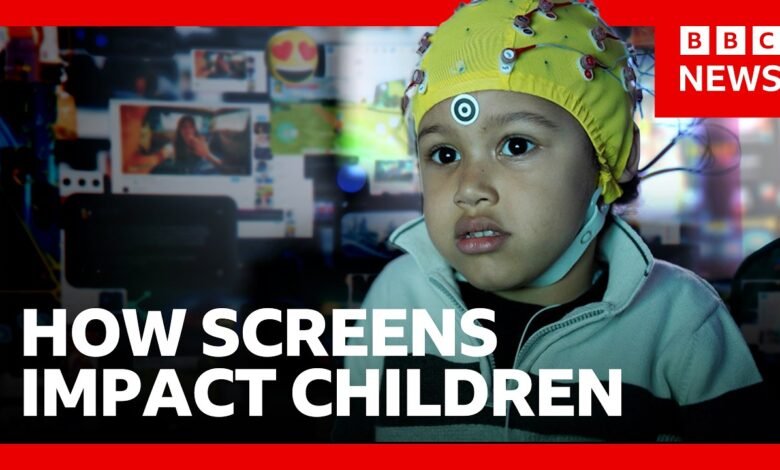
In this urgent and timely BBC News feature, Senior Education Reporter Vanessa Clarke investigates the growing body of scientific evidence linking excessive screen time to measurable neurological and behavioural changes in children under five. Broadcast in the wake of the UK government’s landmark guidance issued on March 27, 2026, the piece weaves together cutting-edge university research, real-world family experience, and expert commentary to present a balanced but sobering picture of what modern screen culture is doing to young minds.
Context: Why Now?
The BBC report arrives at a pivotal cultural moment. The UK government’s new guidance recommends zero solo screen time for children under two, and no more than one hour per day for ages two to five, with additional restrictions around mealtimes and the hour before bed. These are not arbitrary numbers. They are the product of a rapidly expanding field of research into early childhood neurodevelopment.
The report rightly places these guidelines in historical context: over the past two decades, screen exposure for toddlers has accelerated dramatically. Smartphones are ubiquitous. Episodes are shorter and faster-paced. Social media-style content cycles through stimuli in seconds. What was once an occasional cartoon is now an immersive, relentless stream.
The Science: Fight, Flight, and a Toddler on a Sofa
The scientific centrepiece of this report comes from researchers at the University of East London, who have been studying the physiological and neurological effects of fast-paced screen content on toddlers. Their methodology is admirably rigorous, incorporating eye-trace technology, heart rate monitoring, and brain activity measurement to assess real-time responses in young viewers.
The key finding is both striking and intuitive once explained: toddlers’ brains process information up to ten times more slowly than adult brains. When subjected to fast-moving, hyper-stimulating content, young children cannot keep pace cognitively. The result is the triggering of the sympathetic nervous system, the so-called ‘fight-or-flight’ response even when a child is sitting perfectly still.
This is a remarkable and unsettling insight. The body mobilises energy, elevates heart rate, and prepares for physical action, all in response to a cartoon. Over time, repeated activation of this stress response carries real consequences for emotional regulation, attention, and behavioural development.
Key Findings at a Glance
RESEARCH SUMMARY
- Fight-or-Flight Activation: Fast-paced stimulating content triggers the sympathetic nervous system in toddlers, causing elevated heart rate and stress response even while seated.
- Behavioural Correlation: The more television a young child watches, the greater the likelihood of tantrums and emotional dysregulation in later childhood.
- The Tantrum Paradox: Using screens to calm a toddler tantrum can worsen behavioural regulation over time — a trap many parents unknowingly fall into.
- Cognitive Impact: Some studies link more than two hours of daily screen time to lower language and thinking test scores.
- The Replacement Risk: The greatest developmental danger is not screens per se, but what they displace — face-to-face interaction, physical play, and meaningful conversation.
A Family in the Frame: The Montastier Challenge
One of the report’s most effective storytelling devices is its profile of the Montastier family in Manchester, a busy household with two young boys, Romy (nearly five) and Marlo (nearly two). The family agreed to spend one week actively reducing screen time, swapping morning viewing for dancing and other activities, and limiting post-school episodes.
The results are honest and relatable. By Thursday, mother Alexis admitted the challenge had been “quite difficult”. The family had managed some wins, turning off the television after 26 minutes one evening but the idea of a seamless, complete swap proved unrealistic. For a working parent managing school runs, nursery pickups, and dinner preparation, screens offer a functional reprieve that no government guidance can simply wish away.
What the week did achieve was awareness. Alexis noted that the challenge made her more conscious of screen habits she had long intended to change. That shift in parental mindset may, in the long run, prove more valuable than any single week of cold turkey.
Balance and Nuance: The Tech-Friendly Counter-Argument
The report gives fair air time to those who caution against over-correcting. Representatives from tech-friendly parenting organisations note that technology is inescapable even a smart speaker in the home now contains AI, meaning children under five are already interacting with machine intelligence daily. Attempting to remove screens entirely may leave children unprepared for a world in which digital literacy is fundamental.
Strategies for Healthier Screen Habits
PRACTICAL GUIDANCE FOR PARENTS
- Co-view whenever possible: Watching alongside an engaged adult transforms passive consumption into an interactive learning experience.
- Choose slow-paced, age-appropriate content: Programmes like CBeebies are designed with developmental appropriateness in mind, providing stimulation without overwhelming young brains.
- Avoid fast-paced social media-style videos entirely for under-fives: These are designed for adult dopamine cycles, not developing neural architecture.
- No screens at mealtimes or in the hour before bed: These windows are critical for family connection and sleep preparation respectively.
- Use interactive apps purposefully: Tools like the CBeebies Learn app can make screen time active rather than passive.
- Trust your instincts: Experts conclude that parents who are paying attention and making conscious choices are already ahead of the curve.
Conclusion
This BBC News feature is essential viewing for the current moment. It does not moralize or panic. It presents the evidence clearly, acknowledges complexity, and respects the real challenges facing modern families. The inclusion of actual neuroscientific research, filmed with families and explained accessibly, elevates it well above the usual screen-time opinion piece.
The most powerful takeaway is deceptively simple: it is not merely how much screen time a child has, but what that screen time replaces. Sleep, conversation, physical play, and human connection are the raw materials of healthy brain development. When screens crowd those out, the consequences are measurable and lasting.
As technology continues to evolve faster than the research can keep pace, the government has wisely committed to reviewing this guidance regularly. Until then, the advice is clear, evidence-based, and worth taking seriously.
Watch the Full Report here: “What Screens Really do to your Child’s Brain Development | BBC News”