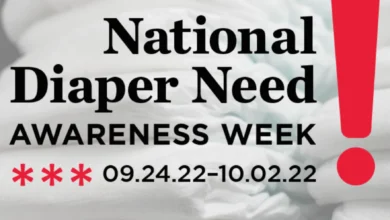
Global Focus of the Week: National Diaper Need Awareness Week Highlights the Struggle for Children’s Basic Needs

For millions of families, diapers are an ordinary part of caring for a baby. But for families struggling to make ends meet, keeping a child clean, dry and healthy can become a difficult financial burden.
As National Diaper Need Awareness Week runs from September 14 to 20, attention is turning to a problem that reaches beyond the cost of a household product. Nearly one in two U.S. families with young children now struggle to afford enough diapers, according to the National Diaper Bank Network’s 2026 Diaper Check.
Diaper need can affect children’s health and wellbeing. Research has linked inadequate access to diapers with parents keeping children in the same diaper for longer periods, increasing the risk of skin irritation and other health concerns. Studies have also found links between diaper need and increased use of paediatric healthcare, while broader research has associated diaper insecurity with parental anxiety and depressive symptoms.
The consequences can also extend beyond the home. Some childcare providers require parents to supply sufficient diapers, meaning families experiencing diaper insecurity may struggle to secure childcare. Earlier research found that parents experiencing diaper need reported missing work or school because they lacked enough diapers for childcare arrangements.
That makes diaper access an issue of child wellbeing, family stability and economic opportunity, rather than simply a matter of consumer choice. When parents have to choose between diapers and food, transport, housing or other essentials, children are affected by pressures they cannot control.
The National Diaper Bank Network says its 2026 research points to wider health and economic benefits from helping families meet diaper needs. Its current campaign is also highlighting the role of community diaper banks and policy solutions in reducing the burden on families.
The issue also raises a broader question for governments, communities and child-serving organisations: what does it mean to support children when families cannot consistently afford their most basic needs?
Every child deserves to be clean, comfortable and cared for. Ensuring families can provide those basics is not simply about easing household expenses. It is part of creating the conditions children need to grow, develop and thrive.