A Reckoning Decades in the Making: The Rhode Island Clergy Abuse Report and the Global Crisis of Child Sexual Abuse
In March 2026, a sobering investigation in the United States once again reminded the world how deeply child sexual abuse can remain hidden within trusted institutions for decades.
A multiyear investigation led by Peter Neronha, Attorney General of the U.S. state of Rhode Island, revealed that dozens of Catholic priests sexually abused hundreds of children over many decades while church leaders failed to act decisively.
The findings focused on the Roman Catholic Diocese of Providence, uncovering a pattern in which abusive clergy were shielded by institutional responses designed more to minimize scandal than to protect children. While the report focuses on a single U.S. state, its implications reach far beyond Rhode Island. The patterns it reveals echo investigations conducted across the world over the last thirty years.
The story of Rhode Island is therefore not simply a local tragedy. It is part of a much larger global reckoning.
Decades of Abuse Hidden in Plain Sight
The investigation examined diocesan records stretching back to the early 1950s and uncovered disturbing findings.
According to the report:
- 75 Catholic clergy members sexually abused more than 300 victims
- The abuse occurred over several decades beginning in 1950
- The actual number of victims is believed to be significantly higher
The report concluded that many perpetrators were able to avoid accountability because church authorities often prioritized protecting the institution from scandal. One of the most troubling discoveries was the existence of what investigators described as a “secret archive.”
This archive contained internal documents detailing abuse allegations, civil settlements, treatment costs, and other sensitive records. These files allowed the institution to keep information about abusive clergy largely hidden from the public. For many survivors, this secrecy delayed justice for decades.
How Institutional Responses Enabled Abuse
The investigation revealed several methods used by church authorities in responding to abuse allegations.
Transfers Instead of Accountability
Rather than immediately removing accused priests from ministry or contacting law enforcement, the Diocese frequently transferred clergy to new assignments. These moves sometimes placed priests in new parishes where communities were unaware of past accusations.
Treatment and Return to Ministry
Beginning in the 1950s, the Diocese established a spiritual retreat-style facility where accused priests were sent for treatment before returning to ministry. Over time, this evolved into sending clergy to specialised treatment centres based on the belief that abusive behaviour could be medically addressed. Investigators described the Church’s reliance on these programmes as deeply misplaced.
Administrative Leave and Quiet Retirement
By the 1990s, accused priests were often placed on sabbatical leave or administrative absence. In some cases, clergy were allowed to retire without being formally removed from the priesthood.
For example, the report describes allegations against Robert Carpentier, who admitted abusing a minor in the 1970s after being accused in 1992. After treatment and extended leave, he remained supported by the Diocese until his death in 2012. Overall, only about 26 percent of identified clergy ever faced criminal charges, and only 14 were convicted.
Grooming and the Long Shadow of Abuse
The report also highlighted the grooming practices used by some abusers. One survivor described how John Allard, a priest serving at Immaculate Conception Church, Cranston, gradually built trust through attention and physical affection before committing abuse.
Such grooming tactics are widely recognized in safeguarding research as a common strategy used by perpetrators to gain access to children while avoiding suspicion. Even more troubling, the report revealed that individuals tasked with reviewing abuse cases were sometimes accused abusers themselves.
One example involved Francis Santilli, who had served on the Diocese review board examining abuse allegations. Complaints later emerged accusing him of child sexual abuse, yet he remained in active ministry for years before removal.
Accountability Still Limited
Although the investigation was extensive, it also faced significant limitations. Rhode Island law does not permit grand jury reports to be publicly released in the same way as in other U.S. states. As a result, investigators had to negotiate access to Church records through an agreement with the Diocese.
That agreement allowed access to 70 years of internal records, including files from the secret archive. However, investigators reported that the Diocese declined requests to interview certain personnel responsible for handling abuse allegations.
Furthermore, some records may have been lost or destroyed, and many victims are believed to have died before ever reporting their experiences. Experts note that it is common for survivors of child sexual abuse to wait decades before coming forward.
From Rhode Island to the World: A Global Pattern Emerges
While the Rhode Island report focuses on one state, similar investigations across continents have revealed strikingly similar patterns.
Major inquiries in countries such as Australia, France, Germany, Ireland, and the United States have documented decades of abuse within Catholic institutions and systemic failures in responding to allegations.
These investigations frequently identified common themes:
- Institutional secrecy
- Reluctance to report allegations to law enforcement
- Transfers of accused clergy to new communities
- Delayed or incomplete investigations
- Survivors speaking out decades after abuse occurred
Collectively, these findings suggest that the problem was not limited to individual perpetrators but also involved systemic weaknesses in safeguarding culture.
The Deeper Lesson: Culture Must Lead Systems
One of the most important lessons emerging from these investigations is that formal policies alone cannot protect children.
Many institutions had safeguarding procedures in place. Yet those procedures failed when the surrounding culture prioritized reputation over accountability. In safeguarding work, this insight has become increasingly clear: “Systems do not create safety. They only manage what culture has already produced.”
Building a Culture That Protects Children
Across families, schools, faith communities, and institutions, the global safeguarding movement increasingly recognises that prevention must begin with culture. Children are safest not simply where policies exist, but where protective values are deeply lived.
This conviction lies at the heart of the Every Part of My Body Is Private to Me®️ Masterclass, an in-person learning experience designed to transform how adults understand, teach, and practise child safeguarding.
Every Part of My Body Is Private to Me®️ Masterclass
Priceless Lessons From a Child Sexual Abuse Story: Healing Pathways, Prevention Strategies, and Culture–Systems Fortification
Dates and Locations
- Lagos – Sunday, May 10, 2026 | 2:00pm–6:00pm
- Abuja – Sunday, May 17, 2026 | 2:00pm–6:00pm
- Port Harcourt – Sunday, May 24, 2026 | 2:00pm–6:00pm
Led by a Leading Safeguarding Voice
The Masterclass is led by Taiwo Akinlami, widely recognised as one of Africa’s foremost advocates for child safeguarding and family strengthening. Drawing from his personal childhood experience of sexual abuse alongside nearly three decades of professional practice, the Masterclass translates lived experience and safeguarding research into practical tools for prevention, healing, and long-term protection.
A Learning Journey Built on Four Pillars
The Masterclass is structured around four pillars:
My Story (Stories, Senses, and Stones)
Personal experience transformed into principles and action.
Prevention
Strategies that reduce vulnerability and stop abuse before it begins.
Healing
Pathways that restore dignity and emotional wholeness.
Fortification
Moving from compliance to culture by building safeguarding systems that endure.
Outcomes That Matter
Participants will leave equipped to:
- Prevent abuse through informed action
- Support survivors with compassion and clarity
- Build safeguarding cultures in families and institutions
- Strengthen systems that consistently protect children
This Masterclass is not simply an educational programme. It is a culture-shaping experience designed to protect children today and secure a safer future for generations to come.
Registration
🔗 https://tinyurl.com/EveryPartofMyBodyIsPrivate2Me
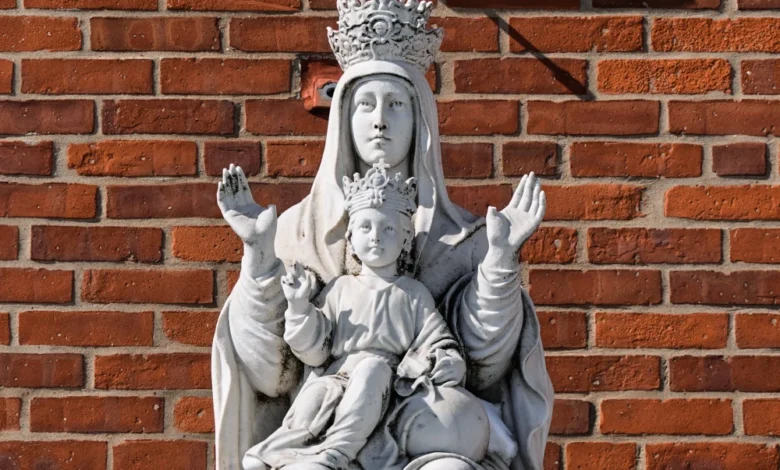
Source of image: A statue of the Virgin Mary and the baby Jesus St. Mary’s Church in Cranston, R.I., last month.Charles Krupa / AP file