Movie Review of the Week: Sunshine & Secrets
The Hidden Side of IVF... a BBC investigation that exposes how desperate families were allegedly deceived about the very origins of their children.
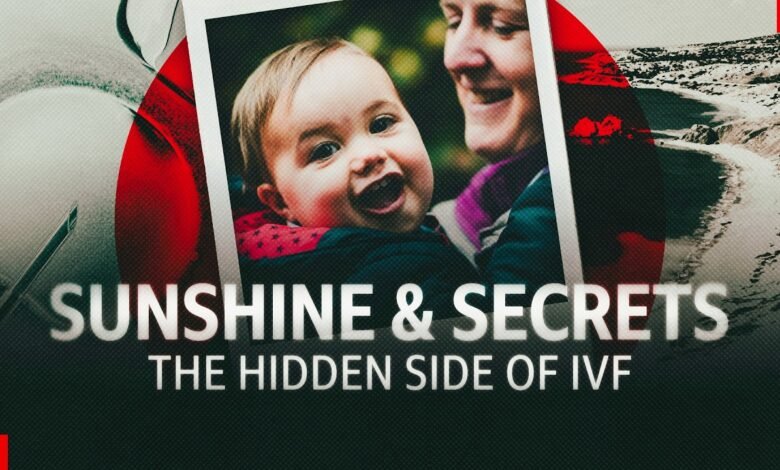
In vitro fertilisation (IVF) is one of modern medicine’s most profound achievements. First successfully performed in 1978, it involves retrieving eggs from a woman’s ovaries, fertilising them with sperm in a laboratory, and transferring the resulting embryo into the uterus. For millions of people worldwide who cannot conceive naturally for several reasons, it represents the difference between having a family and not having one. It is also, as the BBC’s landmark documentary Sunshine & Secrets makes devastatingly clear, an industry ripe for exploitation precisely because the people who turn to it are, by definition, desperate.
The documentary, led by investigative journalist Anna Collinson, is not simply a story about a fertility scandal in Northern Cyprus. It is a searching examination of what happens when medicine operates without ethics, regulation without teeth, and profit without conscience. It raises questions that matter far beyond the families at the centre of it, questions about what IVF patients are owed, what the industry owes them, and what happens in the vacuum left when no one is watching.
What IVF Demands of Its Patients
To seek IVF is to make yourself extraordinarily vulnerable. It requires surrendering intimate biological material; eggs, sperm, embryos to strangers in clinical settings, trusting that those strangers will handle it with precision and honesty. When donor gametes are involved, that trust extends further still: patients are asked to accept that another person’s genetic material will become part of their child’s identity, and they are entitled to know at minimum that the donor they selected is the one actually used. That is not a luxury. It is the foundational ethical contract of the entire process.
Sunshine & Secrets documents how that contract was allegedly broken, repeatedly, across multiple families, at multiple clinics. DNA evidence ultimately confirmed by accredited forensic testing with a margin of error of less than 0.1% indicated that the donors patients believed had been used were not used at all. The sperm ordered from a reputable Danish bank appears, in several cases, never to have been ordered. What was substituted in its place, and why, remains unanswered. That silence is itself a form of ethical failure.
The Ethics of Fertility Tourism
Northern Cyprus has built a thriving fertility industry, clinics are described in the documentary as “abnormally high and intense for an island so small.” The appeal is real: costs run between £5,000 and £10,000, compared to significantly more in the UK. Treatments unavailable or restricted. Clinics market aggressively on social media, presenting glossy success rates and testimonials from satisfied patients. For people who have been turned away, priced out, or let down at home, this is a lifeline. The documentary does not pretend otherwise.
But a lifeline is only as trustworthy as the hands holding it. Unlike the UK, where the Human Fertilisation and Embryology Authority mandates that two members of staff must independently witness and verify every movement of eggs, sperm, and embryos, Northern Cyprus has no independent regulator at all. It is recognised internationally only by Turkey; EU law does not apply. The Ministry of Health is the only oversight body, and by the documentary’s own account, accountability has historically depended on whether individual clinicians choose to act with integrity not on any structural requirement that they do so.
This is the ethical fault line at the heart of fertility tourism. When patients travel abroad for cheaper treatment, they are not simply accepting a different price point. They are accepting a fundamentally different level of protection. What Sunshine & Secrets shows is that many of them did not know this and that some clinics appear to have exploited that ignorance deliberately.
Profit, Power, and the Donor Trade
The documentary raises a further concern that deserves more attention than it has historically received: the ethics of gamete procurement itself. Northern Cyprus has a large student population, many drawn from developing countries and in need of income. Campaigners interviewed in the film suggest that some clinics have recruited young people for egg and sperm donation in conditions of financial vulnerability, offering money to those with few other options. This is not a niche concern. The entire donor model relies on a supply of willing donors, and wherever there is demand and money, there is pressure. Without regulation governing how donors are recruited, screened, compensated, and limited in the number of donations they can make, the system is open to abuse at every level.
In the UK, donors are entitled to some compensation for expenses but cannot profit from donation. They are screened rigorously. There are limits on how many families a single donor can contribute to. These rules exist not to be bureaucratic, but because the children born from these arrangements are real people with a real interest in their own genetic history. Globally, that principle is applied inconsistently at best. At worst, it is ignored entirely.
A Documentary That Earns Its Gravity
What makes Sunshine & Secrets exceptional is that Collinson never lets outrage substitute for rigour. All denials are reported in full. The forensic evidence is presented with its caveats intact. The documentary does not claim to have solved the mystery of what exactly happened inside those clinics; it claims, credibly and carefully, that something was deeply wrong, and that no one in a position of authority was paying close enough attention to stop it.
That is the story of too many medical scandals. The harm is not usually a single catastrophic moment of malice. It is the slow accumulation of unasked questions, unenforced rules, and unregulated spaces where money and desperation meet. Sunshine & Secrets names that accumulation clearly, traces it honestly, and lays it before the audience without flinching. Following its initial broadcast in April 2026, the Northern Cyprus government announced a formal investigation into the clinics named in the documentary. It is a beginning, though whether it results in genuine accountability remains to be seen.
In the meantime, this film stands as essential viewing for anyone who has considered fertility treatment abroad, anyone involved in healthcare regulation, and anyone who believes that an industry this consequential, one that is, in the most literal sense, in the business of creating human lives should be held to the highest possible ethical standard. That it currently is not is not an accident. It is a choice. And choices, unlike accidents, can be changed.
Where to Watch: BBC News YouTube — full documentary, released 2 May 2026, free to stream