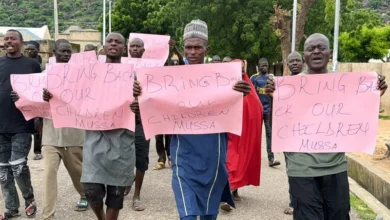
73 Days in Captivity: Oyo Children Are Home, But Why Are Borno Families Still Waiting?
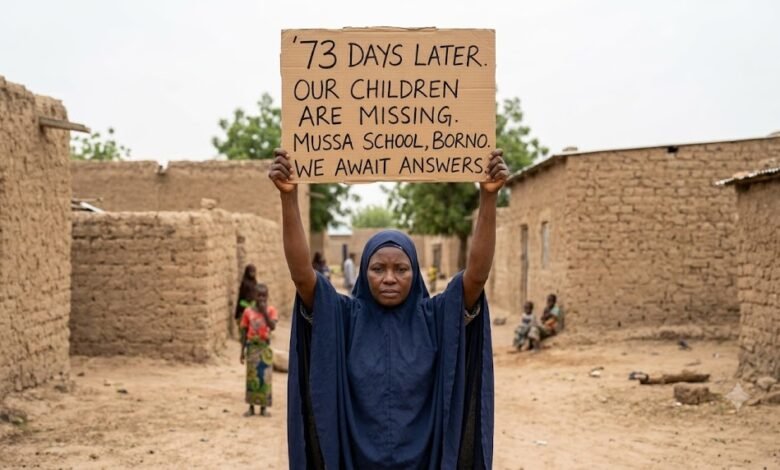
Seventy-three days after gunmen abducted pupils from Mussa Primary and Junior Secondary School in Askira-Uba Local Government Area of Borno State, the children remain in captivity despite repeated assurances from the Federal Government that every effort is being made to secure their release.
Their continued absence has drawn inevitable comparisons with the school abduction in Oyo State, where pupils and teachers kidnapped on the same day, May 15, were rescued after 56 days in captivity through a multi-agency security operation.
While both incidents prompted national concern, they have reached different stages. The contrast has left many Borno families asking whether the lessons from the Oyo rescue can strengthen efforts to bring their own children home safely.
Two Abductions, Two Different Outcomes
Following the May 15 attacks, President Bola Tinubu directed security agencies to intensify rescue efforts for the abducted children in both Oyo and Borno States.
On Children’s Day, he also ordered stronger school protection measures in high-risk communities and instructed the Federal Ministry of Education to deepen implementation of the Safe Schools framework, including improved school vulnerability mapping, community-based early warning systems and rapid response mechanisms.
In Oyo State, the Federal Government complemented those directives with visible engagement. On May 31, a high-powered delegation led by Chief of Staff Femi Gbajabiamila visited Oriire Local Government alongside National Security Adviser Nuhu Ribadu, Inspector-General of Police Olatunji Disu, the Minister of Defence and other senior officials. The delegation met community leaders and families to reassure them that rescue efforts were continuing.
Those efforts culminated on July 10, when a coordinated operation involving the Nigerian Army, Air Force, Navy, Police, Department of State Services, National Intelligence Agency, the National Counter Terrorism Centre, Amotekun Corps, local hunters and other security partners rescued the abducted pupils and teachers.
The Presidency said the operation was intelligence-led and that no concession was made to the kidnappers’ demands.
In Borno, however, families are still waiting for similar news. Although government officials have continued to affirm that security agencies are working towards the children’s safe return, no rescue comparable to the Oyo operation has yet been announced publicly.
Rescue Is Only the Beginning of Child Protection
The Oyo rescue also demonstrated that recovering children is only the first stage of protection. After regaining their freedom, the pupils and teachers were admitted to LAUTECH Teaching Hospital for medical assessment before reunification with their families.
Presidential spokesperson Sunday Dare later visited the children, met with their relatives and announced personal financial support to assist families with transportation as the children were discharged from hospital.
For the families in Borno, however, that phase of recovery has yet to begin. Instead, they continue to live with uncertainty while awaiting news of their children’s fate.
Their experience underscores an important lesson for Nigeria’s child protection system: rescue operations must remain a priority, but so must consistent communication with families, long-term psychosocial support for affected children and stronger investment in preventing attacks on schools before they occur.
As the Borno schoolchildren enter their 73rd day in captivity, the comparison with Oyo is not about measuring one tragedy against another.
Rather, it highlights the need for sustained national commitment to protecting every child, regardless of where they live. Until every abducted child is safely reunited with their family, the work of safeguarding Nigeria’s schools remains unfinished.