
The First Fast Tieri Declared
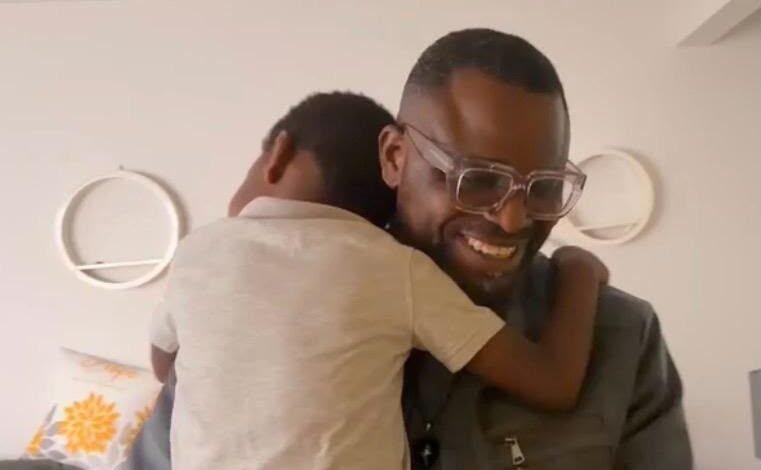
For more than a year now, I have practised intermittent fasting.
Every day, I eat my first meal at about 3:00 p.m. and my last by 7:00 p.m.
On Mondays, I take it a step further: after my Sunday evening meal, I drink only water until Tuesday afternoon.
It is a discipline I have embraced for both health and spiritual reasons.
His mother’s is even more stringent than mine.
So in our home, Tieri sees two adults
who, on many days, simply do not eat until a set hour.
It has become ordinary to him.
In the mornings, I make his breakfast.
Sometimes he offers me a bite of what he is eating.
“No, Tieri,” I tell him. “I am fasting.”
“OK, good,” he says.
One day he asked me,
“Daddy, what does it mean to fast?”
I told him, it is to stay away from food for a while,
for different reasons: for health, for faith, for many things.
He took it in.
And these days he even checks on me,
“Daddy, are you fasting?”
And if I so much as hesitate,
he already knows the answer.
Then last Thursday, something stopped me in my tracks.
I had made his breakfast.
When it was time for his lunch, I called him:
“Tieri, it’s time to eat.”
And to my surprise, he looked at me and said,
“I am fasting.”
“You are fasting? What do you mean? Why?”
“I don’t know. I’m just fasting.”
I tried to talk him out of it.
I told him he did not need to fast, that it was time to eat.
He would not have it.
“No. I’m fasting.”
It became a small battle,
a father trying to persuade his four-year-old to eat his lunch,
and the boy holding his ground.
For the better part of two or three hours he held that line,
until at last I offered him a snack he loves,
and only then did he agree to break his “fast.”
Later, I asked him what fasting means.
He answered with complete confidence:
“It is saving food for later.”
Saving food for later.
He does not understand it.
He does not need to understand it.
He only needed to see me do it.
And that is the whole lesson.
Let me be clear about one thing.
I never sat Tieri down and taught him to fast.
I would never ask a growing child to skip his meals, which is precisely why I fought to get him to eat.
Fasting is a grown person’s practice.
A four-year-old needs his food.
He needs his lunch.
He needs his strength to grow.
But that afternoon, he was not copying my words.
He was copying my life.
And this is not a new discovery for me.
It has been my message for years:
that our precious children are always becoming either the beneficiaries
or the casualties
of our example.
Whatever we admire in our children,
and whatever we lament in them,
we ourselves most often placed there
by our example.
It is the very heart of my book,
Transforming Child Discipline into the Culture of Discipline,
where I argue that we must retire the thing we call “child discipline”
and put in its place a culture of discipline, because without that culture, what we proudly call “child discipline” is too often nothing but the persecuting and the ossifying
of the souls of our precious children.
Long before children understand our instruction, they understand our example.
They live by it.
They reach for it.
They will even reach for the things
that were never meant for them,
simply because they saw us do it.
Not our advice.
Our example.
So the question that has been rekindled in my mind all week is no longer,
“What am I telling my son?”
It is,
“What am I showing him,
and would I be at peace
if he copied it, exactly, tomorrow?”
Because he will.
Over to you.
What have you watched your own children copy from you,
the good, the bad, or the ugly?
Have we ever paused to weigh
the direction of the example we are setting?
How conscious are we of this one truth:
that our children follow our example
long before they follow our instruction?
Share it here if you wish,
or privately if you would rather.
Let us learn from one another.
——-
Follower of Christ. Husband. Father. Egalitarian. Goodwill Investor. Attorney. Author. Thriver. Culture-Edge Family Strengthening and Child Safeguarding Innovator and Practitioner. Value-Based Parenting Ideologue. Change Agent. Rebel with a Cause.