China–Nigeria Children’s Art Contest Sparks Cultural Exchange and Development Boost for Young Artists
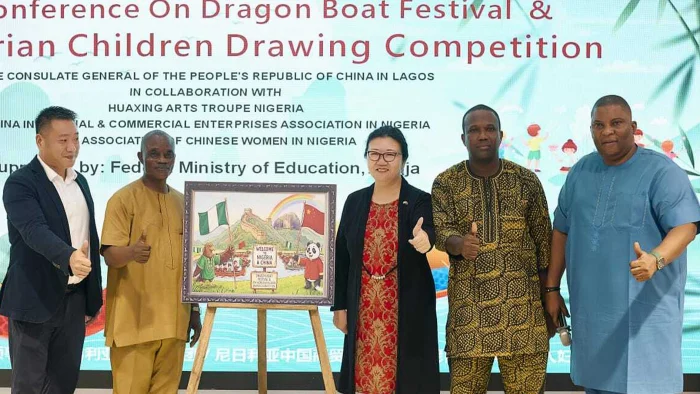
The 2026 Dragon Boat Festival and Nigerian Children Drawing Competition, organised by the Consulate General of the People’s Republic of China in Lagos in collaboration with local partners, offers significant developmental opportunities for children aged six to sixteen, with impacts spanning creativity, education, and cultural understanding.
The initiative supports cognitive development by encouraging children to express ideas visually through themes that combine Nigerian and Chinese cultural symbols such as the Great Wall, Zuma Rock, the Giant Panda, and the Nigerian Eagle. This form of artistic engagement helps strengthen imagination, abstract thinking, and problem-solving skills, which are important foundations for learning and intellectual growth.
It also promotes social and cultural development by exposing children to cross-cultural exchange. Through participation in a shared Nigeria–China theme, children are introduced to global perspectives that can enhance empathy, tolerance, and awareness of cultural diversity. Such exposure is increasingly relevant in preparing children for a more interconnected world.
The competition further encourages motivation and educational engagement through structured recognition and reward systems. The opportunity to receive prizes and national recognition can support goal setting, discipline, and sustained interest in creative learning activities, all of which contribute to broader academic development.
However, from a child safeguarding and development perspective, it remains important that competitive elements are managed in a way that supports inclusion and emotional wellbeing. Ensuring fair access, age-appropriate expectations, and adequate adult supervision is essential to maintain a positive developmental environment for all participants.
Overall, the programme demonstrates how cultural initiatives can support child development by nurturing creativity, strengthening identity, and expanding educational exposure while reinforcing the need for safe and supportive participation frameworks.