
LINDSAY CLANCY: A Father’s Heart for Burdened Families and the Children’s Cry
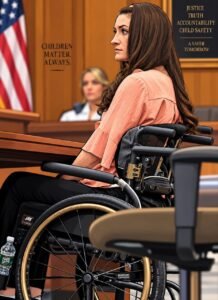
I have followed the Lindsay Clancy case for a long time.
From when the news first broke.
Through the evidence.
The testimony.
The arguments about postpartum psychosis.
The trial.
The mistrial.
And the extraordinary public debate that has followed.
I have deliberately resisted writing about it.
Not because I had nothing to say.
But because I had too much to think about.
I have thought about it as a human being.
As an attorney.
As someone who has spent close to thirty years working in child safeguarding and protection.
But perhaps most intensely, I have thought about it as a husband and a father.
I watched my wife carry our son.
I saw something of the physical and emotional demands of pregnancy.
Childbirth.
Recovery.
And the enormous adjustment that follows the arrival of a child.
I also became a father at an advanced age, after my wife and I had prepared for fifteen years before our son arrived.
Perhaps that journey has given me a particular consciousness of the preciousness of a child.
I do not know.
But I know this:
I cannot casually contemplate the death of a child.
And I cannot comprehend, within ordinary human reasoning, a mother killing the children she carried, birthed and cared for.
Something has gone terribly wrong.
The legal question in the Clancy case is whether Lindsay Clancy was criminally responsible when she killed her three children.
Her defence argued that she was suffering from postpartum psychosis and lacked criminal responsibility.
The prosecution argued that the killings were deliberate and that she understood what she was doing.
The jury could not unanimously resolve that question.
The case therefore remains legally unresolved.
I am not the jury.
And this reflection is not my attempt to become one.
My question lies somewhere else.
Where were the children in all of this?
That question has stayed with me.
Because if a mother can become so mentally unwell that her own children are no longer safe with her, then maternal mental health is not only a women’s-health issue.
It is a family-strengthening issue.
And it is a child-safeguarding issue.
That does not mean demonising mothers experiencing mental illness.
Quite the opposite.
If serious illness can alter a person’s perception of reality, then recognising it early, taking it seriously and surrounding that parent with effective support may be part of how we protect both the parent and the children.
And so I keep returning to two questions.
First: if children are not safe in the place designed to be their first safe haven—their home—where are they safe?
And second:
Are we paying sufficient attention to the conditions that can transform a struggling parent into a danger to herself, himself, or the children?
I do not want this conversation reduced to two camps.
One shouting:
Monster.
The other shouting:
Victim.
Three children are dead.
Cora.
Dawson.
Callan.
Whatever conclusions the legal system ultimately reaches, nothing restores those three lives.
So perhaps the more useful question for those of us concerned about families is not merely:
Who do we blame?
Perhaps it is also:
What do we learn?
What warning signs were present?
Who could see them?
Who understood them?
What support existed?
What failed?
What should families know?
What should fathers and partners know?
What should healthcare systems recognise?
And at what point should concern about a parent’s mental state trigger an immediate safeguarding plan for the children?
Because this is where the conversation must become practical.
Fathers, spouses and extended families must understand that profound confusion, delusions, hallucinations, paranoia, dramatic changes in behaviour, severe mood disturbance, or thoughts of harming oneself or a child are not things to explain away as merely the pressures of new motherhood.
Some situations require urgent professional intervention.
And when serious postpartum mental illness is suspected, our concern cannot stop with:
How do we help the mother?
We must simultaneously ask:
Are the children safe?
That is not punishment.
It is safeguarding.
A mother in crisis needs compassion, treatment and protection.
Her children need protection too.
The two interests are not enemies.
Healthcare professionals must therefore look beyond symptoms to risk.
Partners and families must know the warning signs and what to do when they see them.
And safeguarding systems must be capable of responding before concern becomes catastrophe.
Because child safeguarding cannot begin only after a child has been harmed.
By then, safeguarding has become emergency intervention.
The first responsibility is prevention.
I love my son deeply.
I have watched his mother love him deeply.
And perhaps that is precisely why this case troubles me.
Love matters enormously.
But love, by itself, cannot always protect a family from severe illness.
Sometimes love needs knowledge.
Sometimes love needs intervention.
Sometimes love needs another adult to recognise:
Something is wrong here.
And act before something irreversible happens.
That is where my reflection on the Lindsay Clancy case presently leaves me.
Not with a verdict.
With questions.
Because three children lost their lives in the place where children should ordinarily be safest.
And if we cannot ask what might prevent the next Cora, Dawson and Callan from dying, then we may be having the wrong conversation.
The question is not only what happened to Lindsay Clancy.
The safeguarding question is: what happened to the children and what must we learn from it?
Compassion for a mother in crisis and uncompromising protection of her children are not competing responsibilities.
We must be capable of holding both.
#50PlusDad
Follower of Christ. Husband. Father. Egalitarian. Goodwill Investor. Attorney. Author. Thriver. Culture-Edge Family Strengthening and Child Safeguarding Pioneer, Innovator and Practitioner. Value-Based Parenting Ideologue. Change Agent. Rebel with a Cause. Three Decades in the Saddle.