Vietnam Pledges Stronger Action to Protect Children Online, Offline
Vietnam has reaffirmed its commitment to safeguarding children as it works with UNICEF to address risks affecting children, including online threats, poverty and unequal access to essential services.
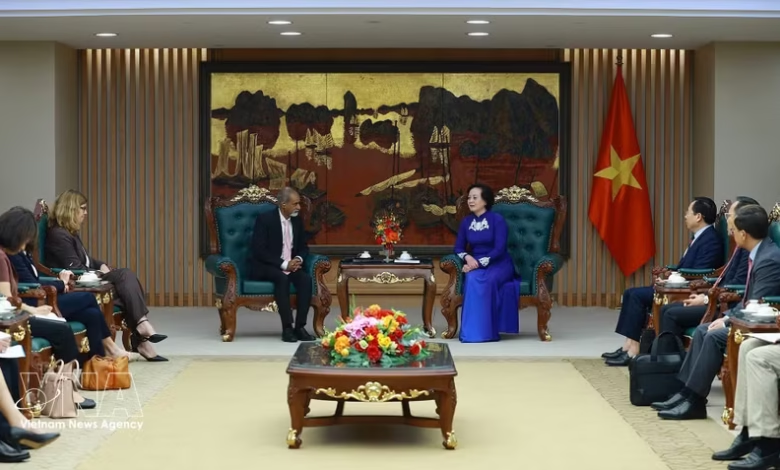
Deputy Prime Minister Pham Thi Thanh Tra made the commitment during a meeting with Sanjay Wijesekera, Regional Director of UNICEF’s Asia-Pacific Regional Office, in Hanoi on August 24.
Tra described child care, education and safeguarding as strategic priorities, stressing that investment in children is essential to the country’s future. She highlighted progress in education, nutrition, healthcare and efforts to reduce disparities affecting vulnerable children.
However, significant challenges remain. Vietnam has nearly 25 million children, with 8.4 per cent reportedly living in multidimensional poverty and about 2.3 per cent in special circumstances. Ethnic minority children account for 18.3 per cent of the country’s child population.
The meeting also focused on safeguarding children in the digital environment. UNICEF proposed stronger cooperation on digital technology and artificial intelligence to improve children’s education and health while protecting them from cyber threats.
Tra called for measures to prevent harmful online content and activities from negatively affecting children’s mental health, nutrition and cognitive development.
Vietnam and UNICEF are preparing a new 2027-2031 Country Programme, with priorities including stronger child-related policies, youth skills development and improved investment in children.
Tra also called for a comprehensive child data system to help authorities identify children’s needs and improve services at national and local levels.
Wijesekera praised Vietnam’s sustained investment in children and its early commitment to the UN Convention on the Rights of the Child.
The planned partnership reinforces the need for coordinated safeguarding measures that can help children grow, learn and develop in safer and more inclusive environments.