Thousands of Migrant Children at Risk in Ceuta as Child Sexual Assault Allegations Raise Wider Child Protection Concerns
Migrant Children in Ceuta Face Growing Child Protection Risks
The reported sexual assault of children among migrants who arrived in Ceuta has drawn attention to a much larger child protection crisis unfolding in the Spanish enclave.
Legal proceedings are underway in three separate cases involving alleged sexual assaults, including cases involving two girls. Two suspects are reportedly in custody. The allegations include sexual touching and rape, and one of the suspects is also accused of drug trafficking.
The allegations remain subject to due legal process. However, the cases have raised an urgent question that extends beyond the individual investigations: what happens to children when they cross a border without a parent, a stable home, or immediate access to a functioning protection system?
Thousands of Children May Be Outside the Protection System
The cases emerged after a mass arrival of migrants in Ceuta, with Spanish authorities reporting that the majority of those who entered were subsequently returned to Morocco.
Unaccompanied children cannot simply be treated in the same way as adults because child protection obligations apply to them regardless of their migration status.
Around 1,500 children and adolescents are currently understood to be within Ceuta’s child protection system. Humanitarian organisations estimate that as many as 4,000 others may remain outside it.
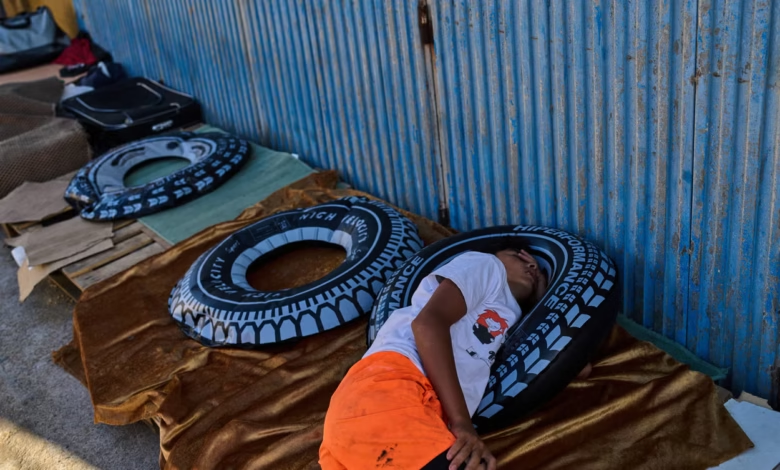
Some are reportedly still waiting to be identified and referred to appropriate services. Others are sleeping in public spaces, including on the streets and beaches.
That situation creates serious protection concerns.
A child sleeping without safe accommodation may be exposed to violence, exploitation, trafficking, sexual abuse and other forms of harm. A child who has not been properly identified may also struggle to access healthcare, psychosocial support, legal assistance or a trusted adult who can advocate for their safety.
Save the Children has warned that some of the children may be as young as nine.
The Sexual Assault Allegations Must Be Seen Within the Wider Protection Crisis
The reported assaults should not be treated as isolated incidents disconnected from the wider conditions in which these children are living.
Children who have travelled across several countries, particularly children travelling without their parents or another responsible adult, may arrive after experiencing displacement, conflict, poverty, violence or exploitation.
They may also have limited knowledge of the country in which they have arrived and may not know where to seek help.
This creates a significant safeguarding vulnerability.
Save the Children has expressed concern about the risks of sexual violence, exploitation and trafficking affecting unaccompanied children in Ceuta. The organisation has also raised concerns about food, hygiene, sanitation, healthcare and access to safe shelter.
Some children reportedly have only one meal a day in emergency accommodation, while girls have reportedly experienced urinary infections.
These conditions matter because child protection is not limited to responding after abuse has occurred. It also requires creating conditions that reduce children’s exposure to foreseeable harm.
A Child Cannot Be Protected If the System Cannot Find the Child
One of the most troubling aspects of the situation is the number of children reportedly remaining outside the formal protection system.
Identification is therefore not simply an administrative exercise.
For an unaccompanied child, identification can be the point at which authorities determine age, locate family members where appropriate, assess immediate risks, arrange safe accommodation and connect the child with health, education, legal and psychosocial services.
Until that happens, a vulnerable child may remain effectively invisible to the institutions responsible for protecting them.
Reports of children sleeping rough in Ceuta illustrate the consequences.
There have also been reports of parents searching for children who became separated during the mass arrival.
Every unidentified or unaccounted-for child represents a safeguarding concern that requires urgent attention.
The Children Are Not Responsible for the Circumstances in Which They Arrived
Among those in Ceuta is Omar, a Sudanese teenager whose name has reportedly been changed to protect his identity.
He is said to have spent about a year and a half travelling through Algeria, Libya, Chad and Morocco before reaching Ceuta. He is now reportedly living on a beach.
His story illustrates something important about migration and child protection.
A child does not lose the right to protection because the journey was irregular, because the border was crossed without authorisation, or because the child arrived without documentation.
The central question for safeguarding authorities should remain: What does this child need to be safe?
What Should Happen Now?
The immediate priority should be to bring children outside the protection system into safe, child-appropriate accommodation and ensure that each child receives an individual protection assessment.
That should include:
- prompt identification and age assessment where necessary
- safe accommodation away from adults who may pose a risk
- access to food, clean water, sanitation and healthcare
- protection from sexual violence, trafficking and exploitation
- access to trained child protection personnel
- appropriate psychological and emotional support
- mechanisms for reporting abuse safely
- family tracing and reunification where it is safe and appropriate
- access to legal assistance and information about their rights
- particular attention to the protection needs of girls and other children facing heightened risks
Children who report sexual assault must also be treated as children first. Their safety, dignity, privacy and access to appropriate care must be protected throughout any investigation.
The Bigger Child Safeguarding Lesson
The reported sexual assault cases are serious in their own right. They also expose a broader reality about child safeguarding during humanitarian and migration crises.
A child does not have to be inside a formal child protection facility before the duty to protect that child begins.
Protection begins when the child is identified as vulnerable.
It continues through accommodation, healthcare, education, family tracing, legal proceedings and eventual resettlement, reunification or another appropriate long-term solution.
Ceuta’s situation therefore demands more than an investigation into individual allegations.
It requires a coordinated child protection response capable of finding the children who remain outside the system, understanding the risks they face and ensuring that those risks are addressed before more children are harmed.
The allegations of sexual assault should be investigated thoroughly and fairly. At the same time, thousands of other children must not become invisible while attention remains focused on individual cases.
Every child found without protection is a safeguarding matter. Migration status does not remove a child’s right to safety, dignity and protection from abuse.