Dolly Parton: A Better Future for Children, One Book at a Time
Dolly Parton’s Imagination Library: A Global Gift to Children
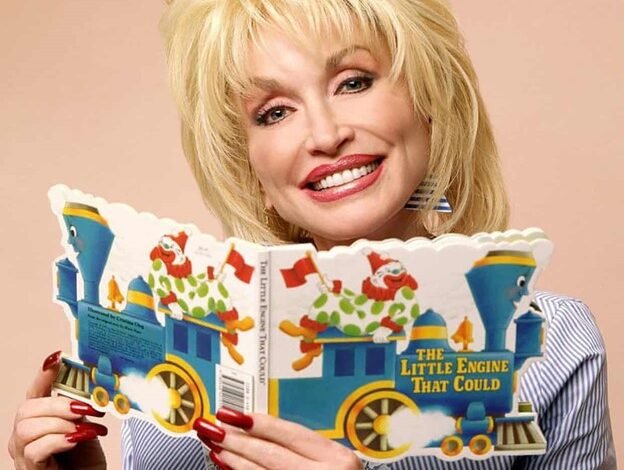
Dolly Parton’s story is a powerful reminder that a difficult childhood does not have to determine the future of a child.
Born as one of 12 children in a poor family living in a one-room cabin in Tennessee’s Smoky Mountains, Parton grew up with limited resources. Her father, Robert Lee Parton, was a hardworking tobacco farmer who, despite being unable to read, was considered by Dolly to be one of the smartest people she had ever known.
His struggle with literacy deeply influenced her.
“All children should grow up in a home full of books.”
That belief eventually became one of Dolly Parton’s most remarkable contributions to children around the world.
The Birth of the Imagination Library
In 1995, Dolly Parton launched the Imagination Library, initially as a local programme in Sevier County, Tennessee.
The idea was simple but powerful: give young children books of their own, free of charge.
Children under five receive age-appropriate books delivered directly to their homes. What began as a local initiative eventually expanded beyond Tennessee and became an international literacy programme serving children in countries including the United States, Canada, the United Kingdom, Ireland and Australia.
the programme has distributed more than 332.4 million books.
But the impact goes beyond the number of books.
For a child who may never have owned a book before, receiving one addressed personally to them can communicate something deeply important:
“You matter. Someone is thinking about you. Your education matters.”
That is one of the most powerful aspects of Parton’s vision.
Books as a Tool for Equality
Dolly Parton’s work demonstrates that access to books should not depend entirely on a child’s family income.
Children from disadvantaged backgrounds can face barriers to educational resources that other children may take for granted. By placing books directly into children’s homes, the Imagination Library helps reduce one of those barriers.
The programme also recognises the importance of representation.
British author Selina Brown described the emotional experience of seeing thousands of copies of her book My Rice Is Best prepared for distribution. The book features a Black protagonist, demonstrating how children’s literature can help children see themselves, their experiences and their cultures represented in stories.
Representation matters because children deserve books that allow them to say:
“I see myself in this story.”
They also deserve stories that introduce them to people and experiences different from their own.
Taking Children’s Stories Beyond the Page
Dolly Parton’s commitment to children has extended beyond literacy.
During the COVID-19 pandemic, she began reading children’s books aloud through online recordings, bringing stories into homes at a time when many children were isolated from school, libraries and other learning environments.
Her work has also included music for children. She released the children’s album I Believe in You.
Her charitable contributions have extended into children’s healthcare as well. She donated $1 million to Nashville’s Monroe Carell Jr. Children’s Hospital at Vanderbilt University Medical Center following her niece’s treatment for leukaemia and later made another $1 million donation to support paediatric infectious disease research.
Her philosophy was clear: children deserve opportunities to grow up healthy, safe and supported.
Supporting Children’s Dreams
Dolly Parton’s impact also reaches education beyond early childhood.
Through the Dollywood Foundation, her scholarship initiatives have supported young people pursuing their educational dreams. One programme highlighted in the source material offers $15,000 scholarships to five high school seniors who have dreams they want to pursue.
This reflects an important principle:
Supporting children should not stop at keeping them in school. We should also help them imagine what is possible beyond school.
Remarkable Achievements
Dolly Parton’s contribution to children can be seen across several areas:
- Promoting Early Childhood Literacy
Through the Imagination Library, millions of children have received books free of charge, helping make reading more accessible to young children and families.
- Creating a Global Children’s Literacy Movement
What began as a small local initiative grew into an international programme reaching children across multiple countries.
- Making Children Feel Seen and Valued
The personal delivery of books gives children a sense of ownership and reminds them that they are important.
- Promoting Representation
The programme distributes books featuring different cultures, experiences and identities, helping children encounter both familiar and unfamiliar worlds through literature.
- Supporting Children’s Health
Her multimillion-dollar contributions to paediatric healthcare and research demonstrate a commitment to children’s wellbeing beyond education.
- Supporting Young People’s Educational Dreams
Her foundation’s scholarship initiatives provide financial support to young people seeking to pursue their aspirations.
- Using Creativity to Reach Children
From children’s books to music and storytelling, Parton has used her creative influence to make learning enjoyable and accessible.
- Turning Personal Experience into Social Impact
Perhaps most remarkably, Parton transformed an experience from her own childhood—growing up with a father who could not read—into a global effort to help children develop a love of books.
Lessons to Note
Dolly Parton’s story offers several important lessons for anyone working in child protection, education and safeguarding.
- Every child deserves access to learning resources
Poverty should not determine whether a child has access to books, education and opportunities.
- Children’s emotional wellbeing matters
Making a child feel remembered, valued and important is part of creating a nurturing environment.
- Early intervention matters
Developing literacy from an early age can establish foundations for future learning.
- Children’s voices and identities should be represented
Children need access to stories that reflect their cultures, experiences and communities.
- Child wellbeing is holistic
Protecting children means considering more than physical safety. Education, emotional wellbeing, healthcare, dignity and opportunity all matter.
- Adults can use their influence to create protective environments
Dolly Parton’s platform demonstrates how an individual’s resources, influence and creativity can be directed toward children’s wellbeing.
- Give children hope
A child who receives a book, scholarship or opportunity is receiving more than a material resource. They are being encouraged to imagine a future beyond their present circumstances.
Summary
Dolly Parton’s greatest achievement may not simply be the millions of books distributed or the millions of dollars donated.
It is the vision behind those actions.
She saw something from her childhood that could easily have been viewed only as a disadvantage. Instead, she turned it into motivation to ensure that other children would have access to something her father lacked.
Her story teaches us that personal experiences can become catalysts for positive social change.
And perhaps most importantly, it reminds everyone involved in children’s work that safeguarding is not only about responding when something goes wrong.
It is also about creating environments where children can learn, dream, feel valued, stay healthy, develop their potential and grow into the people they are capable of becoming.
**A child with a book has a doorway to another world.
A child who is supported has a pathway to a better future.**
Dolly Parton spent decades helping children find both