
What Tieri Is Teaching Me About Courtesy
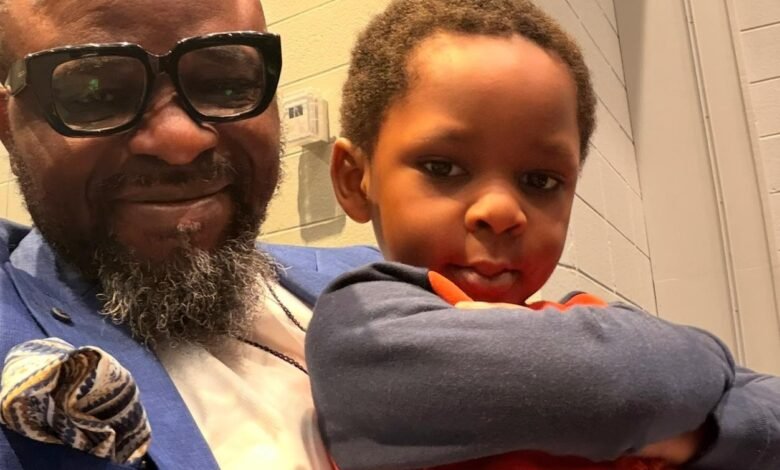
One of the quiet privileges of fatherhood is the opportunity to witness, in real time, the formation of a child’s character.
Not in dramatic moments.
Not in grand achievements.
But in simple, passing expressions that reveal what is taking shape in the heart.
Over the past four years, one of the things that has brought me deep joy in raising Tieri has been watching him grow in courtesy, tenderness, and the habit of expressing appreciation. These may appear to be small things. In a noisy world that often celebrates performance over character, they may even be overlooked. But I do not think they are small at all.
I think they matter deeply.
A child who says “please,” “thank you,” and “excuse me” is not merely learning social etiquette. He is learning attentiveness. He is learning regard for others. He is learning that words carry weight and that other people deserve to be treated with care.
Recently, as I was leaving for the library, Tieri looked at me and said, “Daddy, you look handsome.”
It was a brief moment. A simple sentence. But it touched me deeply.
Then, on another day, as we sat in the car on our way out, he said, “Daddy, you are smelling nice… you are smelling fresh.”
Again, it was a small moment. Yet it stayed with me.
Why?
Because such words are not just compliments. They are signs. They tell a story about what a child is noticing, what he is learning, and what kind of inner disposition is being formed. They reveal a spirit that is learning not only to observe goodness, but also to express it.
That matters to me as a father.
It reminds me that raising a child is not only about correction, provision, and instruction. It is also about atmosphere. It is about what surrounds the child daily. It is about the tone of the home, the culture of the family, and the spirit in which relationships are conducted.
Children learn quickly.
They watch closely.
They absorb much more than we often realise.
They learn not only from what we teach directly, but from what we model repeatedly.
This is one reason we have tried to be intentional in how we relate with Tieri. We do not see him as “just a child,” in the dismissive sense that adults sometimes use that phrase. We see him as a person. A young person, certainly, but still a person. A person with dignity. A person with judgment in seed form. A person with the capacity to choose, to respond, to learn responsibility, and to deserve respect.
So we try to treat him that way.
We listen to him.
We take his efforts at communication seriously.
We do not reduce his voice simply because of his age.
And I believe that children often reflect the quality of the regard they receive. When they are treated with dignity, they begin to understand dignity. When they are spoken to with respect, they begin to speak with respect. When they are given honour, they begin to show honour.
That is why I do not see courtesy as superficial. I see it as moral formation in visible form.
In many ways, the future of any society rests not only on what children know, but on who they are becoming. Intelligence matters. Skill matters. Achievement matters. But character matters too. Perhaps even more. And character is often formed first in the small, ordinary rituals of everyday life.
A polite word.
A thoughtful observation.
A sincere compliment.
A child noticing his father and saying, “Daddy, you look handsome.”
A child leaning over in the car and saying, “Daddy, you are smelling fresh.”
These are tender moments, yes. But they are also instructive moments. They remind me that the values we practise at home do not disappear into the air. They settle. They take root. And then, sometimes, they return to us in the words and ways of our children.
For me, that is one of the quiet rewards of fatherhood.
Not simply to teach.
But to see that what is being taught is beginning to live.
If you want, I can also turn this into a shorter newspaper-style op-ed, or a more literary op-ed with a stronger opening hook.
Do have an INSPIRED week ahead with the family.